Welcome to Zealots of Zaldar

Zealots of Zaldar is a tabletop adventure/role-playing game for 2 to 5 players. One player takes on the role of Zaldar, the unseen sorcerer who guides and referees the game. The other players take on the roles of Heroes, customized characters who explore and interact with the world of Emara.

This guide is streamlined for online play, so much of the detail relevant to the Zaldar player has been omitted.
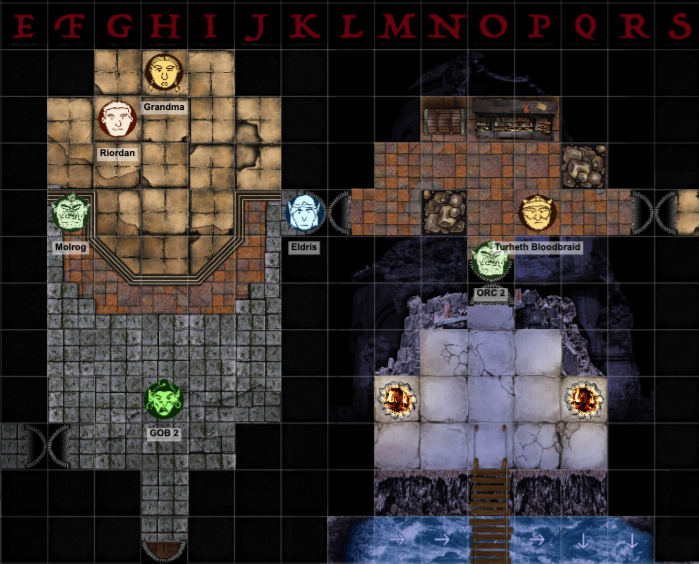
Roll20 Gameplay

Getting Started

Before starting Zealots of Zaldar, one player must be designated as Zaldar. This player will be responsible for running the game: directing the flow of activity, describing the outcome of actions, and acting as the referee and conductor of the game's events.

In other games with a similar referee vs. player dynamic, the Zaldar or "referee" player is known as the "Dungeon Master" (Dungeons & Dragons), "Game Master" (GURPS), "Zargon" (HeroQuest), and so on. In Zealots of Zaldar and throughout the rulebook, this player is simply known as Zaldar. Zaldar controls the game world of Emara, and determines how the world and its denizens react to the Heroes' actions and dice rolls.

Once a Zaldar player is designated, the other players create Heroes. These players decide how their Hero characters interact with the game world, including what they say, the actions they perform, and any other details a player wishes to impart upon their Hero.

Creating Characters

To create Hero characters, Zaldar will hand each Hero player a blank Character Sheet. Players may begin the game immediately using one of the ready-to-play Level 0 Hero characters, or spend Character Points to advance to Level 1 or beyond before the game session, at Zaldar's discretion.

Character Sheets

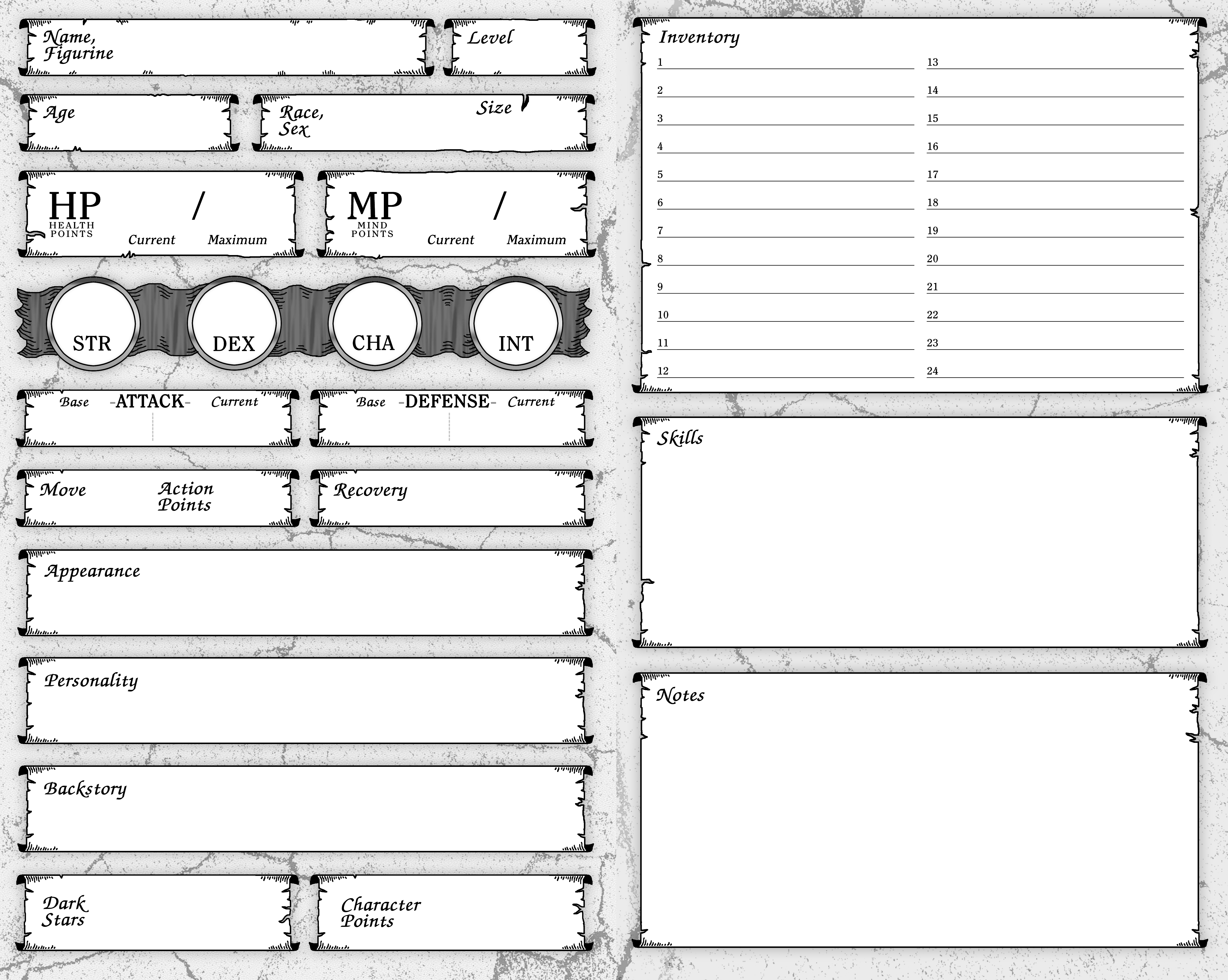
The character sheet is an ongoing record of a Hero's status. It contains basic information about the character, as well as their skills, attributes, and so on.
Character Sheet
The various fields represent the following:

Name, Figurine

This is the name of the Hero, which can be anything the player chooses, along with the figurine used to represent the Hero. The figurine shortname will be something like "ORC 1," "HUM 2," and so on.

Level

This represents the Hero's growth, progress, learning, and overall capabilities. In general, a character or creature with a high level will be particularly strong, smart, or otherwise powerful.

Kind

Kind refers to one of the 5 playable creature types. The five options available for Hero characters are Dwarf, Elf, Goblin, Human, and Orc, whose various attributes are described below.

Size

Size is a number that represents the character's overall height and general mass. It is always a multiple of 10, and roughly corresponds to height: a Size of 60 is approximately 6 feet tall. Each Kind has a base Size listed in its stat table.

HP (Health Points)

HP or Health Points / Hit Points are a measure of a character's current overall physical health. Whenever a character takes damage (e.g. from a punch, stab, explosion, bite, bludgeon, and so on), their Current HP is reduced.

A character whose Current HP value is the same as their Maximum HP value is considered to be functioning physically at their top form; whereas a character with 1 HP has likely suffered multiple severe injuries, and is very close to death.

MP (Mind Points)

MP or Mind Points represent a character's overall mental state, as well as their ability to focus closely on tasks.

STR

STR is short for Strength, and represents a character's raw physical strength, as well as the amount of weight they can lift and carry.

DEX

DEX is short for Dexterity, and represents a character's ability to dodge and defend themselves from physical attacks, their general physical agility, and so on.

CHA

CHA is short for Charisma, and represents a character's ability to communicate effectively, persuade others, lead and inspire people with speech, as well as lie and deceive.

INT

INT is short for Intelligence, and represents a character's perception, ability to understand difficult concepts, arcane knowledge, and so on.

Equipment Requirements

A character who does not meet a weapon's or armor's stat requirements cannot equip it.

ATTACK

This represents a character's ability to inflict physical damage.

Base - Every creature has a Base Attack, which corresponds with one of the dice.

Current - This is how much HP damage the creature can inflict with their current weapon. By default, an Unarmed Attack -- i.e., any attack that occurs without a weapon -- is the creature's Base Attack + STR.

For example, an unarmed Level 0 Goblin has a Base Attack of d4, and a STR of 1. If this Goblin were to punch another creature, it would roll the Base Attack die (d4), then add their STR (1).

The result would be the total HP damage inflicted by the punch, which would be reduced by the subsequent Defense roll made by the punch recipient.

DEFENSE

This represents a character's ability to deflect, absorb, or avoid physical damage.

Base - Every creature has a Base Defense, which corresponds with one of the dice.

Current - This is how much HP damage the creature can prevent when attacked. By default, a character without any armor rolls their Base Defense + DEX when attacked.

For example, a Level 0 Goblin has a Base Defense of d4, and a DEX of 3. If a Level 0 Goblin received a bashing from a club that inflicted 6 HP damage, they would roll their Base Defense die (d4), then add their DEX (3).

Let's say the result of the Goblin's Base Defense d4 roll was a 2. The Goblin would add their DEX, for a total Defense Roll result of 5.

Deducting this value from the club-wielding assailant's Attack Roll of 6, the final outcome of the attack would be 1 HP deducted from the Goblin's Current HP. While not perfect, the Goblin was able to reduce most of the damage inflicted by the club strike.

Move

This represents how many spaces on the game board a character may walk on their turn. There are many different ways of moving around -- walking, running, jumping, crawling, and so on -- which are outlined in the Movement section of the rulebook.

Action Points

Action Points or AP represent things a character can do on their turn that aren't related to traveling around: talking, attacking, searching, casting spells, digging holes, opening doors, and so on. The various actions have varying AP values, as detailed in the Actions section of the rulebook.

Recovery

This represents the minimum number on a d20 that must be rolled in order to recover after being knocked out. Each Kind has a base Recovery value (shown as a number followed by "+", e.g. "15+" means the character must roll 15 or higher on a d20). A lower Recovery value is better, as it makes recovery easier. Recovery can be improved by spending 2 Character Points to reduce it by 1, to a minimum of 10.

When a character is Down (reduced to 0 HP), they may attempt a Recovery Roll at the start of each turn. When a character is Unconscious (from rolling a 1 on a Down Recovery Roll), they may attempt a Recovery Roll once every 30 rounds (Quest Mode) or once per hour (Campaign Mode). See the Recovery action and the Down and Unconscious statuses for full details.

Dark Stars

Dark Stars are rewarded by Zaldar throughout the game sessions. Sometimes, they are explicitly listed in the Quest Book as rewards for finding hidden things and achieving certain tasks. Other times, Zaldar may choose to give a Dark Star to a player if they have done something particularly impressive, or otherwise played in a way that enhances the game's enjoyment or immersion for all participants.

Any player may, at the conclusion of their turn or another player's turn, spend a Dark Star to immediately take a full turn. Only one Dark Star extra turn may occur per round, across all players.

For example, if Susie takes a turn in the normal turn order, then Doug takes a turn, Susie may spend a Dark Star to take an extra turn after Doug. No other player (including Susie) may spend a Dark Star for an extra turn until the Heroes' next round.

Character Points

Character Points are used to advance a Hero's Level. They are rewarded based on accomplishing goals in the campaign, as described in the Quest Book or in Zaldar's notes if running a custom campaign.

At any time, a Hero may exchange 3 Dark Stars for 1 Character Point.

Inventory

This is a listing of all the items, weapons, armor, and other goods a Hero has on their person.

Without any containers (backpacks, belt pouches, quivers, etc.), a character can only carry what they can hold in their two hands — one item per hand. To carry additional items, a character must acquire a container such as a Backpack, Utility Belt, or Quiver, each of which has its own capacity. See the Wearables section for available containers and their limits.

Skills

This section lists all the unique Skills a Hero can perform. These are described in greater detail in the Skill section of this rulebook.

Notes

This is an area for any miscellaneous information a player may wish to jot down -- conversations had with other characters, secret codes, and so on.

Hero Creatures

Dwarf
Stout, hardy miners and manufacturers, at home deep within the cavernous Undermara.
Level 0 Dwarf:
HPMPSTRDEXCHAINT MoveSizeRecoveryBase
Attack
Base
Defense
12 3 3 1 2 3 5 40 12+ d6 d8
Default Skill:
First Aid - Basic
Elf
A cunning and reclusive kind, considered stewards of the wild.
Level 0 Elf:
HPMPSTRDEXCHAINT MoveSizeRecoveryBase
Attack
Base
Defense
7 4 1 2 1 4 7 50 16+ d4 d6
Default Skill:
Archery - Basic
Goblin
Spry, opportunistic little creatures, adept at escaping the conflicts they start.
Level 0 Goblin:
HPMPSTRDEXCHAINT MoveSizeRecoveryBase
Attack
Base
Defense
5 3 1 3 2 3 8 30 14+ d4 d4
Default Skill:
Trickery - Intermediate
Human
A curious and adaptive creature, found in every corner of Emara.
Level 0 Human:
HPMPSTRDEXCHAINT MoveSizeRecoveryBase
Attack
Base
Defense
8 4 2 2 3 3 6 60 15+ d6 d6
Default Skill:
Persuasion - Intermediate
Orc
Hulking, dim-witted brutes who respect only the rule of violence.
Level 0 Orc:
HPMPSTRDEXCHAINT MoveSizeRecoveryBase
Attack
Base
Defense
10 3 3 2 0 2 6 80 13+ d8 d6
Default Skill:
Counterattack - Basic

Gameplay

Once the Heroes have filled out their character sheets, they're ready to play. The Quest Book contains all the details necessary for Zaldar to run the included Dawn of the Dark Star campaign. Starting at Quest 1: Midnight in Moonshine Ravine, Zaldar introduces the narrative, and the players immediately start the Quest.

The game alternates between the turn-based Quest Mode, which takes place on the Quest Mat, and the Campaign Mode, a more free-form conversational role-playing format. In both cases, the core of the gameplay remains the same: Zaldar provides details about the Heroes' current circumstances, the Heroes react to and engage with those circumstances, and Zaldar reveals the outcome. This continues for the entirety of the game session.

Game Sessions

Unlike a game of Chess or Checkers in which one participant triumphs, Zealots of Zaldar is an episodic game, in which the characters and game state persist over numerous game sessions. It's unrealistic to play through an entire campaign in one sitting, so instead, break the campaign into smaller game sessions.

While everyone's preferences differ, a suggested format for a Zaldar game session is two hours in length, with a 5-minute intermission after one hour. This is sufficient time to cover a lot of territory given your game group's play speed, but not so long that it's an unreasonable ask on a weekday night. You should always consider the game participants' time to be of the highest importance, and as Zaldar, you have the most control over how the game time is spent. Spend it well, and you and your players will be hungry for more!

You don't necessarily have to finish a Quest, or achieve some other specific objective, in order to end a game session. If there's more to explore on the Quest Map, record on a Notes sheet the current status of the gameboard: the rooms visible, the coordinates of the characters, and any other pertinent details. This will allow you to quickly resume gameplay at the next game session. (For Roll20 online play, this is not a concern.)

Rounds & Turn Order

In Quest Mode, gameplay is divided into rounds. Each round consists of two phases: the Heroes' phase, followed by Zaldar's phase.

During the Heroes' phase, each Hero takes one turn. The Hero players collectively decide the order in which they act, and they may change this order from round to round. Once every Hero has taken a turn, the Heroes' phase ends and Zaldar's phase begins. Zaldar then takes turns for all creatures and characters under his control. When Zaldar's phase is complete, a new round begins.

In Campaign Mode, there is no formal turn order. Zaldar directs the flow of conversation, and players act and react as the narrative demands.

On a Hero's Turn

On a Hero's turn, they may Move and perform Actions.

By default, all characters have 3 Action Points they may spend per turn. They can also move as many spaces as indicated by their Move attribute.

There are numerous different types of movement, including Running, Swimming, Jumping, and more. These are detailed below.

Direction Die

The Direction Die is a d4, with the values N, S, E, and W. It is used to determine a random direction on the Quest Mat whenever one is needed, such as when a thrown object misses its target and veers off course, or when a creature moves erratically (e.g. a shambling Zombie).

Critical Hit Die

The Critical Hit Die is a black d6, with four blank faces and two faces bearing a white "CRITICAL HIT" icon. It is rolled when a character uses the Aim / Focus action, alongside their Attack, Defend, or Skill roll. If a CRITICAL HIT face comes up, the roll's total is doubled. See Aim / Focus for full details, including Chained Criticals.

Facing

Every character on the Quest Mat faces one of the four cardinal directions: N, S, E, or W. A character's facing is represented by the orientation of their figurine on the board.

Changing which direction your character faces costs 0 Move Points and can be done freely at any time during your turn. When a character attacks, both the attacker and the target are considered to be facing a specific direction at the moment of the attack.

Because changing facing is free, it is trivial to face an opponent before attacking them. Facing matters primarily for determining Back Attacks and Flank Attacks (see Specialty Attacks under Attack).

On Zaldar's Turn

On Zaldar's turn, he controls all the non-Hero characters. However, the number of creatures Zaldar may act with on a given turn is limited to the number of conscious Heroes — that is, Heroes who are not Unconscious or Dead. Heroes who are Down (at 0 HP or below, but not yet Unconscious) still count as conscious. If all Heroes are Unconscious, Zaldar's creatures stand idle.

Damage Types

Every source of damage in Zealots of Zaldar has a damage type. There are seven damage types, one for each of the six magic schools plus Physical:

Type Sources
Physical Weapons, unarmed attacks, falling, environmental hazards, traps
Fire Fire school spells, fire-based creature abilities
Air Air school spells, lightning-based creature abilities
Water Water school spells, ice- and water-based creature abilities
Emara Emara school spells, nature-based creature abilities
Heart Heart school spells
Chaos Chaos school spells, curse-based creature abilities

For most combat, damage type does not change how damage is dealt or received. A sword deals Physical damage and a Searing Spear deals Fire damage, but in both cases the target rolls Defense as normal.

When Damage Type Matters

Damage type becomes relevant when a spell, item, or ability specifically interacts with it. These interactions are always described on the item or ability itself. For example:
  • An item might say: "Any time your character takes Fire damage, immediately roll a d4 to recover that amount of HP, not exceeding your Max HP."
  • An artifact might say: "All Air damage directed at the bearer is reflected back at the attacker."
  • A creature ability might say: "Deals 2d6 Fire damage. The target does not roll Defense against this damage."
There are no global resistance tables or weakness multipliers. If an item or ability doesn't mention a damage type, the type has no special effect — damage is simply dealt and received normally.

Identifying Damage Type

  • Spells deal damage of their school's type. A Water spell deals Water damage; a Fire spell deals Fire damage.
  • Weapons and unarmed attacks deal Physical damage unless otherwise stated.
  • Creature special abilities specify their damage type in their description (e.g., "fire breath dealing 2d6 Fire damage").
  • Environmental damage (falling, drowning, lava, traps) is Physical unless the source is clearly magical.

Movement

Walking
Move your character up to their MOVE attribute in spaces per turn.
Cost: MOVE attribute (free)
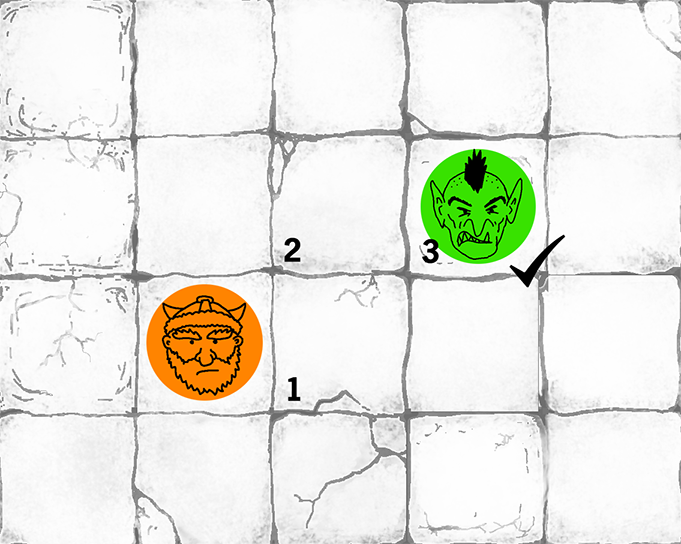
Adjacent means cardinally adjacent (N/S/E/W). Diagonal spaces are not adjacent.

Walking does not cost any Action Points. On each turn, you may move your character up to as many spaces as their MOVE attribute allows. Movement is restricted to open spaces; you cannot walk through solid wall or other terrain.

Moving a character from one open space to an adjacent open space costs 1 MOVE. A diagonal movement costs 2 MOVE.

You may move through friendly-occupied spaces at no cost, however your movement turn must end on a blank space — you cannot occupy the same space as another character. Moving through spaces occupied by neutral or hostile creatures is not allowed, unless performing a Dodge (see Dodge under Actions).
Extra Movement
Spend Action Points to gain additional movement.
Cost: 1 Action Point = 1 Move Point
On your turn, you may use an Action Point as if it were a Move Point. So, if walking, you would be able to spend your 1–3 Action Points to move 1–3 extra spaces; or, if Running, you could spend your 1 Action Point to move 1 additional space. This does not apply in reverse — you may not use a Move Point as if it were an Action Point.
Moving Silently
Walk quietly to avoid detection.
Cost: 1 Action Point
Your character may attempt to walk in such a way that minimizes noise, which may be useful in situations where one wishes to avoid detection. Moving Silently must be the first action of your turn and costs 1 Action Point. If successful, all movement for the remainder of your turn is silent. See the Move Silently action for full details.
Running
Double your MOVE at the cost of most of your Action Points.
Cost: Free (limits AP to 1 that turn)
Running allows you to move double your normal MOVE spaces, however you are limited to spending 1 Action Point that turn. You may only RUN if you have not made any previous actions or movement that turn.

For example, if Turgar the Orc's MOVE is 5, then on every turn he may walk up to 5 spaces, using his 3 Action Points however he pleases. If he chooses to RUN, he may move up to 10 spaces on his turn, however he may only spend 1 Action Point.
Jumping
Leap over an adjacent space, landing on the space beyond it.
Cost: 2 Move Points
To jump over an adjacent space, spend 2 Move Points and roll a d20. Add your DEX to the roll, plus any other relevant modifiers. The destination space must be the same elevation or lower than your origin.

If your total is 10 or higher, you jump over the adjacent space, landing on the space directly after it (2 spaces straight in a cardinal direction). You cannot jump over creatures or large obstacles (trees, chests, etc.) — only small or low objects can be jumped over. You also cannot jump through solid walls or closed doors.

If your total is less than 10, the jump fails and your character remains in place. The 2 Move Points are still spent.
Long Jump
Leap over two consecutive spaces while running, landing 3 spaces away.
Cost: 4 Move Points (must be Running)
Your character must be Running and have at least 4 Move Points to spend.

Roll a d20 and add your DEX, plus any other relevant modifiers.

If your total is 10 or higher, you clear 2 consecutive spaces and land 3 spaces away from your starting position (in a cardinal direction) at a cost of 4 Move Points.

If you fail your roll, you stumble and land just 1 space away — in the adjacent space. The 4 Move Points are still spent in either case.

The same restrictions as Jumping apply: you cannot jump over creatures or large obstacles (trees, chests, etc.), solid walls, or closed doors. The destination space must be the same elevation or lower than your origin.
Crawling
Move while Tripped at a reduced speed.
Cost: 2 Move Points per space
A Tripped creature may Crawl at a cost of 2 Move Points per space (instead of the normal 1). Crawling movement follows cardinal directions only.

While Tripped, Crawl is the only movement type available — a Tripped creature cannot Walk, Run, Dodge, Jump, Long Jump, Climb, or Swim. A Tripped creature may spend 3 Move Points to Stand Up, removing the Tripped status.
Falling
Damage taken from falling depends on the height.
Cost: Passive
Falling inflicts:

0 HP damage at 0–3 feet (Under 1 space)
1d6 + 1 HP damage at 4–6 ft (Roughly 1 space)
2d6 + 2 HP damage at 7–12 ft (1–2 spaces)
3d6 + 3 HP damage at 13–18 ft (2–3 spaces)
4d6 + 4 HP damage at 19–24 ft (3–4 spaces)
Instant Unconscious at 25–50 ft (4–8 spaces)
Instant Death at anything beyond that.

A character who takes falling damage is Tripped upon landing. A character who falls does not roll Defend dice against the damage, unless otherwise specified.
Climbing Up / Down
Scale climbable surfaces with both hands free.
Cost: 1 Move Point per foot, minimum 3
While standing adjacent to an object, space, or terrain feature that is at least 3 feet (1/2 space) higher or lower than your current elevation, and deemed climbable by Zaldar, a character may spend Move Points to climb up or down that feature.

By default, a creature can move into an adjacent space that is less than 3 feet higher or lower than their current space at a flat cost of 1 Move Point.

• For adjacent spaces that are at least 3 feet higher or lower, spend 3 Move Points to climb onto that space.
• For adjacent spaces that are at least 4 feet higher or lower, spend 4 Move Points to climb onto that space.
• For adjacent spaces that are at least 5 feet higher or lower, spend 5 Move Points to climb onto that space.
• A 6 foot climb costs 6 Move Points; a 7 foot climb costs 7 Move Points; an 8 foot climb costs 8 Move Points; and so on.

A difference in height of 6 feet (one space) or greater requires passing either a STR Skill Check if climbing up / ascending, or a DEX Skill Check if climbing down / descending. The Move points are spent regardless if the Skill Check passes or fails.

By default, climbing up or down 6 feet requires passing a Difficulty 6+ STR or DEX Skill Check; climbing up or down 7 feet is a Difficulty 7+ STR or DEX Skill Check; climbing up or down 8 feet is a Difficulty 8+ STR or DEX Skill Check; and so on.

Certain circumstances may incur additional penalties at Zaldar's discretion.

To climb 3-5 feet, one hand must be free. To climb 6+ feet, both hands must be free of items.
Swimming
Travel across or under water.
Cost: 3 Move Points per space
Swimming allows a character to travel across or under water. Each water space costs 3 Move Points, whether on the surface or submerged.

A swimming character cannot Attack or perform most Actions. A swimming character can Defend against attacks, but their Base Defense roll is treated as if they rolled a 1, with all other defense modifiers applying as normal.
Standing Up
Get back on your feet after being Tripped or knocked Down.
Cost: 3 Move Points
If you've been Tripped or have just recovered from being knocked Down, it costs 3 Move Points to stand up. You may not Run on the same turn that you stand up, however your Action Points are unaffected. While Tripped, a creature suffers a -2 penalty to Attack rolls and a -2 penalty to Defend rolls. These penalties are removed upon standing.

Actions

Aim / Focus
Aim your weapon, or focus on a specific task.
Cost: 1 Action Point (AP) + 1 Mind Point (MP)
Details: The Aim / Focus action allows a character to roll the Critical Hit die alongside an Attack, Defend, or Skill roll, with the chance of doubling the result.

Cost: 1 AP + 1 MP, spent in addition to the cost of the action being performed. When using Aim / Focus with a Defend roll made outside of your turn, the AP cost is waived, but the MP cost of 1 still applies.

How it works: Roll the black Critical Hit die at the same time as your Attack / Defend / Skill roll. Calculate the roll's total as normal. If the Critical Hit die shows a CRITICAL HIT face, the total is doubled.

Chained Criticals: After rolling a successful CRITICAL HIT, you may choose to keep the doubled total, or gamble by rolling the Critical Hit die again.

• If you roll another CRITICAL HIT, the total is doubled again (4x the original, then 8x, and so on).
• You may stop and keep your current multiplied total at any point after a successful CRITICAL HIT roll.
• If you roll a blank face, all multipliers are lost. The action resolves using the original, un-multiplied total.
Attack
Make a physical attack against a target.
Cost: 2 Action Points (AP)
Details: An Attack will inflict Physical damage on a target, reducing the target's HP (Health Points). Factors affecting the amount of damage include the attacker's stats and skills, the weapon used, as well as various skill-based or magical bonuses. An attacked character immediately makes a Defend roll, countering some or all of the damage caused by the attack.


Making an Attack Roll


1. The attacker must have at least 2 AP (Action Points) to spend.

2. The target must be within range of the attacker, and the attacker must have a clear shot at the target (i.e., the target is not behind a wall or other total obstruction).

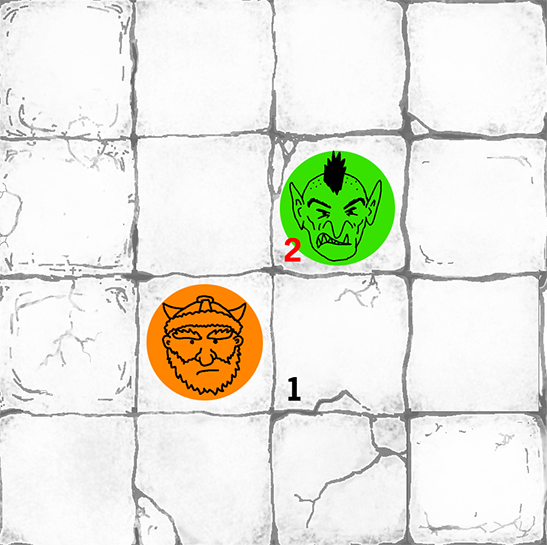
Different weapons have different ranges; in the case of an Unarmed Attack, or an attack with the Dagger, the range is 1. This means that the target of the attack must be in a space directly adjacent to the attacker, or otherwise 1 space away from the space occupied by the attacker.

You may attack through a friendly-occupied space at no penalty, but not through a space occupied by a neutral party or foe, nor through a wall or other physical obstruction.
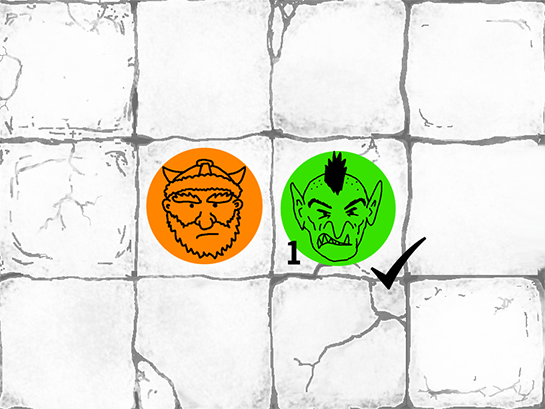


The Dwarf's attack with a Dagger (Range: 1) is valid, as his Goblin target is 1 space away.


The Dwarf's unarmed attack (Range: 1) is invalid, as his Goblin target is 2 spaces away.


The Dwarf's attack with the Spear (Range: 3) is valid, as his Goblin target is 3 spaces away.


3. Roll the appropriate dice based on the attack, and total the results.

For example, an Unarmed Attack is (Base Attack + STR), so in order to attack Mondo the Goblin, Thurig the Orc rolls a d8 and adds his Strength (STR), which is 3. The d8 roll is a 5, so Thurig's total attack roll is 5 + 3, or 8.


4. The target rolls their Defend dice, and totals the results.

By default, a creature's Defend roll is their (Base Defense + DEX). In our example with Thurig, his target Mondo has a Base Defense of d4 and a Dexterity (DEX) of 2. Mondo's d4 roll is a 1, so his total defense roll is 1 + 2, or 3.


5. If the Defend total is greater than or equal to the Attack total, then the attack concludes without inflicting any damage. Otherwise, deduct that Defend total from the Attack total, then reduce the target's HP by this amount. If a target's HP is reduced to 0 or below, they are immediately Down (see Down under Statuses). If a single wound reduces the target to -10 HP or below, they skip Down entirely and are immediately Unconscious.

In our example with Thurig's attack against Mondo, Thurig's attack total of 8 is reduced by Mondo's defense total of 3. The remaining amount, in this case 5, is deducted from Mondo's Hit Points (HP). Since this attack didn't reduce Mondo's HP to 0 or below, he may continue as normal. Otherwise, Mondo's status would immediately change to Down.


Attack - Unarmed

Roll your Base Attack die and add your STR. Add any other modifiers, and total the result.


Attack - Melee Weapon

Check the weapon description to determine the damage dealt. The weapon must be equipped (i.e., currently held in hand) by the attacking character. Add any other modifiers, and total the result.


Specialty Attacks

Back Attack: If you attack a creature from the space directly behind them (opposite the direction they are facing), you may optionally re-roll one die in your Attack roll. This can be any one die, including the Critical Hit die, the Ranged Attack Roll d20, or any damage die. You may only re-roll once per Back Attack.

Flank Attack: If a character is targeted by more than one attacker (i.e. they are within range of multiple opponents, and one of those opponents has already attacked them since their last turn), then every attacker is allowed to re-roll one die per attack against the flanked target. This can be any one die, including the Critical Hit die, the Ranged Attack Roll d20, or any damage die. You may only do this once per Flank Attack.

Flanked Back Attack: If a character is targeted by more than one attacker (i.e. they are within range of multiple opponents, and one of those opponents has already attacked them since their last turn), AND you can target their back, then you are allowed two re-rolls per attack against the flanked target. These can be any two dice, including the Critical Hit die, the Ranged Attack Roll d20, or any damage die.

Unexpected / Sneak Attack: If a creature is undetected by their target (e.g. after a successful Move Silently / Sneak), the attacker adds an extra +d6 damage to their Attack roll.

This applies to any type of attack (Melee, Ranged, or Magical).


Attack - Ranged Weapon

Assuming the weapon is equipped and loaded, fire a ranged weapon (i.e. Shortbow) at a target.


Unlike Melee Attacks, which require only one dice roll, a Ranged Attack is broken into two parts: the Ranged Attack Roll and the Ranged Damage Roll.


Ranged Attack Roll

1. Roll a d20. This is your base Ranged Attack Roll. The target must be at least 3 spaces away — you cannot fire a ranged weapon at a target that is too close.

2. Count the number of spaces between you and the target. For every space beyond the weapon's range, deduct -1 from the Ranged Attack Roll.

3. Untrained archers will deduct -5 from their Ranged Attack Roll. Creatures with the Archery skill will add their Archery bonus to the Ranged Attack Roll (+4 for Archery Basic, +6 for Archery Intermediate, +8 for Archery Advanced, and +10 for Archery Expert).

4. Include any other relevant modifiers (spells, statuses, artifacts, etc.) to the Ranged Attack Roll.


If the calculated total of the Ranged Attack Roll is 10 or greater, your ranged attack has hit, and you can determine the damage inflicted with the Ranged Damage Roll. If the Ranged Attack Roll total is less than 10, the Ranged Attack misses, and the action is concluded. The projectile used (i.e. arrow) is deemed lost.

When using Aim / Focus with a Ranged Attack, roll the Critical Hit die along with the Ranged Damage Roll. A successful Critical Hit will double the Ranged Damage Roll.


Ranged Damage Roll

The Ranged Damage roll varies based on the weapon and projectile used, as well as the attacker's skill. A target struck by a Ranged Attack rolls their Defense as normal, unless otherwise noted.

Cast Spell
Cast a spell from one of your known magic schools.
Cost: 3 Action Points (AP)
Details: A character with the Sorcery skill may spend 3 AP and the spell's MP cost to cast a spell. The caster must meet the spell's requirements (range, line of sight, etc.) and must have the appropriate Sorcery tier for the spell's level.

1. Choose a spell you are able to cast.
2. Spend 3 AP and deduct the spell's MP cost from your current MP. If you do not have enough MP, the spell cannot be cast.
3. Choose a valid target within the spell's range.
4. Resolve the spell's effect as described in the spell's details.

If the spell deals damage, the target rolls their Defense as normal, unless the spell states otherwise.
Coup de Grace
Render an adjacent Down character unconscious.
Cost: 1 Action Point (AP)
Details: If a character is Down and you are adjacent to them, you can spend 1 AP to deliver a Coup de Grace. The target is immediately rendered Unconscious.

No Attack or Defense roll is made. The target must be Down — this action cannot be performed on a standing, conscious character.
Defend
Defend from a direct attack, or take on a defensive stance.
Cost: Variable Action Points (AP)

0 AP: Defend against an attack
1 AP: Gain +1 on your next Defense roll
2 AP: Gain +2 on your next Defense roll
3 AP: Gain +3 or +LEVEL (whichever is greater) on your next Defense roll

All defense bonuses expire at the start of your next turn, at which point you may use the Defend action again.
Details: Defending is an action that can be done reactively when another creature attacks you, or proactively in anticipation of harm.

When a character is attacked, their Defend roll is their Base Defense plus their Dexterity, or (Base Defense + DEX). Armor, spells, and other modifiers can also add or subtract a character's Defend roll.

When using Defend as an action on one's turn, a character may add a bonus (based on the number of Action Points spent) to their next Defend roll:

1 AP: +1 to next Defense roll.
2 AP: +2 to next Defense roll.
3 AP: +3 or +LEVEL (whichever is greater) to next Defense roll.

All defense bonuses expire at the start of that character's next turn.
Dodge
Pass through a space occupied by a hostile creature.
Cost: 1 Action Point (AP) + at least 2 Move Points
Details: To Dodge through a space occupied by a neutral or hostile creature, spend 1 AP and at least 2 Move Points, then both characters make a contested DEX Skill Check:

Dodger: d12 + DEX
Occupant: d12 + DEX

If the dodger's total is greater than the occupant's total, the dodge succeeds and the dodger passes through the space, continuing their movement if they have Move Points remaining. Ties go to the occupant.

If the dodge fails, the dodger remains in their original space and the Move Points are spent.
Elevation Advantage
Higher ground grants combat bonuses when 3+ feet above an opponent.
Cost: Passive — no action required
Details: When a character's effective elevation is 30+ units (3+ feet) higher than their opponent, they gain the Upper Hand:
  • +1 Ranged Attack (added to hit roll)
  • +1 Ranged Damage (added to damage total)
  • +1 Melee Attack (added to attack total)
  • +1 Melee Defense (added to defense total when the defender is higher)
  • +1 Trip/Shove Attack (added to contested attack roll)
This is a single tier with no graduated bonuses. The 30-unit threshold matches the movement-blocking elevation threshold.

Vertical Distance: Elevation difference adds to ranged attack distance for range penalty calculation. 1 vertical space per 60 elevation units (6 feet). Shooting downhill: vertical distance adds to range, but the +1 hit / +1 damage offsets it. Shooting uphill: vertical distance adds to range with no bonus — a pure disadvantage.

Effective elevation includes standable features (e.g., standing on a boulder adds the boulder's height).
Equip / Inventory
Retrieve, exchange, or store an item in your personal inventory.
Cost: 1 Action Point (AP)
Details: Without any pockets, sheaths, or pouches, a bipedal character only has use of their two hands to carry items and weapons. If you have anything stored on a belt, in a travel pack, scabbard, quiver, or any other container on your person, you may spend 1 AP to retrieve it from your inventory and place it into one of your open hands. Exchanging a held item with another item from inventory also costs 1 AP. Placing a currently-held item into inventory costs 1 AP.
Extinguish Flame
Attempt to extinguish flames on yourself or an adjacent ally.
Cost: Variable Action Points (AP)

3 AP + 3 Move Points: Extinguish yourself
2 AP: Extinguish an adjacent ally
Details: Attempt to put out flames on yourself or an adjacent ally. See the On Fire status for full details on self-extinguishing, ally-extinguishing, and water submersion.
Give / Take
Exchange an item with another character.
Cost: 1 Action Point (AP)
Details: Assuming you're holding an item in your hand, you may spend 1 AP to give that item to an adjacent character, assuming the other character has agreed to accept the item. You may also spend 1 AP to retrieve an item from an adjacent character, assuming they have agreed to give it to you and are currently holding the object.
Inspire
Spend 1 MP to give an ally a bonus on their next roll. Requires Persuasion (Intermediate) or better.
Cost: 0 Action Points (AP), 1 Magic Point (MP)

Reactive: triggers outside your turn.
Details: Inspire is an ability that you can use outside of your turn on an ally within line of sight (up to 10 spaces) to give them a bonus on their next Recovery or Defend roll.

Each character with Inspire can use it only once between their own turns. The ability resets at the start of that character's next turn.

Persuasion (Intermediate): +1 to the ally's roll.
Persuasion (Advanced): +d4 to the ally's roll.
Persuasion (Expert): +(your CHA) to the ally's roll.

Inspire can override a natural 1 on a Recovery roll — if the bonus raises the result above 1, it is treated as a normal low roll rather than an automatic Unconscious trigger.

A character cannot Inspire themselves. The inspirer must be alive, conscious, and not Stunned.
Leave a Quest Map
The party may immediately exit the Quest Map if certain conditions are met.
Cost: 1 Action Point (AP)
Details: If the Heroes have a clear path to an exit point (i.e. a stairwell, path, etc.) on a Quest Map, and they can reach this point without Zaldar (i.e. monsters) interfering, then the Heroes can immediately all exit the map through the chosen point. This is done at Zaldar's discretion, as there may be unsprung traps, monsters, or other hidden circumstances that prevent the Heroes from leaving the location.

If a Hero reaches an exit on a Quest Map, they can remove their figurine from play, and give their turn to any other Hero of their choosing.
Load / Reload
Load and arm a ranged weapon.
Cost: 1 Action Point (AP)
Details: Move an arrow from quiver to bow, arming the ranged weapon.
Look / Search
Take a look at something.
Cost: 1 Action Point (AP)
Details: A Hero may spend 1 AP to look at a target or survey their surroundings. Click a creature to study it, a feature to examine it, or empty space to survey the area. Zaldar will describe what the Hero sees.

Range: Looking at something from a distance gives a description, but opening containers or interacting with features requires adjacency.

Opening containers: When adjacent to a container (treasure chest, etc.), spend 1 AP to view its contents and take up to one item. To take additional items, spend another AP.

Searching for hidden things: If the target cell contains something concealed (a hidden door, a trap, a secret compartment, etc.), a Perception check (d12 + INT, plus any Perception skill bonuses) is automatically rolled against the difficulty. A successful roll reveals the hidden object or detail.
Loot Corpse
Spend 1 AP to browse an adjacent dead or unconscious character's belongings and take up to one item.
Cost: 1 Action Point (AP)
Details: You must be adjacent to a Dead or Unconscious character. Spend 1 AP to view their inventory. You may take one item (including gold), transferring it to your own inventory. To take additional items, spend another AP. The AP is spent whether you take an item or not. Looting can be performed during combat.
Move Silently / Sneak
Attempt to sneak about without creating noise or alerting suspicion.
Cost: 1 Action Point (AP)
Details: Must be performed as the first action of your turn, before moving or taking any other action.

Spend 1 AP and roll a d12 + DEX, plus any relevant modifiers. This is your Move Silently / Sneak roll, which becomes the Difficulty that nearby characters must beat in order to detect you.

Any creature who can "see" you (i.e. has a clear line of sight to your character) will be unaffected by your Move Silently / Sneak. These creatures will continue as normal, aware of your presence.

For creatures who can't see you (e.g. in another room), your movement for the rest of your turn is silent, and you move undetected. Being undetected by a creature grants an additional +d6 to all Steal attempts.

When your character moves undetected, other creatures make a reactive Perception check (d12 + INT, plus any Perception skill bonuses) at a cost of 0 AP as soon as you enter their line of sight. If their total is greater than or equal to your Move Silently / Sneak roll, they detect you and react accordingly — they may mistrust you, become hostile towards you, target you, and so on.

Any successful Move Silently / Sneak undetected state expires at the end of your turn. When your turn ends, any creature who has a line of sight to yours can "see" you, and is aware of your presence and will act accordingly.

Zaldar may adjust earshot range based on the environment (e.g., a noisy tavern reduces it, a silent cave extends it).

Move Silently may only be attempted once per turn.
Open / Close
Attempt to open or close an adjacent unlocked door, drawer, cupboard, window, etc.
Cost: 1 Action Point (AP)
Details: Attempt to open or close an adjacent unlocked door, drawer, cupboard, window, etc.
Pacify
Use Charisma to calm a hostile creature, preventing it from attacking you for 1 round.
Cost: 2 Action Points (AP)
Details: Spend 2 AP to attempt to Pacify a hostile creature. Both the Pacifier and the target must have INT 2+, and the target must be within line of sight and 10 spaces.

Roll: d12 + CHA + (Persuasion or Trickery bonus, whichever is higher)

The target rolls d12 + target's INT + Perception bonus.

The Pacifier must roll strictly higher than the target (ties go to the defender).

On success: The target gains the Pacified status, and on the Pacified creature's next turn, they will not attack the creature who Pacified it. The Pacified status is removed at the end of the Pacified creature's turn.

A creature can be Pacified by multiple characters simultaneously. If the Pacifier attacks the Pacified target, the Pacified status is broken.
Pick Up / Drop
Pick up or put down an object.
Cost: 1 Action Point (AP)
Details: PICK UP: Stand on or adjacent to a square occupied by an item and spend 1 AP to pick the item up and add it to your inventory.

DROP: Leave an item from inventory on an adjacent blank space or beneath your character.
Recovery
Attempt to regain composure after being critically wounded.
Cost:
Details: A character who is Down cannot Stand Up, can only move 1 Move space, can only spend 1 Action Point. At the start of their turn, at a cost of 0 Action Points, a Down character may roll a d20 for their Recovery Roll. If the result of the Recovery Roll is greater than or equal to that character's Recovery attribute, they are restored to 1 HP, and may immediately make a full regular turn (i.e. with normal Movement and 3 Action Points). The character remains Tripped after recovering.

If a Down character rolls a natural 1 on their Recovery Roll, they become Unconscious. An Unconscious character may attempt a Recovery Roll once every 30 rounds in Quest Mode, or once per hour in Campaign Mode (rather than once per turn). See the Down and Unconscious statuses for full details.
Skill Check
Use one of your character's Skills.
Cost: 1 Action Point (AP)
Details: Roll a d12 and add the appropriate Primary Attribute. For example, if you're doing a generic Strength check, roll the d12 and add your STR, along with any other modifiers. If your total is greater than or equal to the Difficulty of the specific task, you have accomplished it.

Some Skill Checks are reactive and cost 0 AP. These occur in response to another character's action — for example, making a Perception check (d12 + INT, plus any Perception skill bonuses) to detect a sneaking character, or a CHA-based Skill Check to see through a lie. Zaldar will call for reactive Skill Checks as needed.


• Difficulty Levels
Difficulty 1: Any sentient being can do this for 1 AP. No need to roll.
Difficulty 5: Pretty much anyone can accomplish this task their first or second try. Opening an old wooden window.
Difficulty 10: 1/5 chance that someone of 1 STR / CHA / INT / DEX could do this first try. A stubborn lid on a jar; a weak person could (given the right circumstances) open it on their first attempt, but this could require 7+ attempts for the weak person. A strong person could probably get it in the first 1-3 tries. An extremely strong person could do it instantly.
Difficulty 15: You'd need a minimum of ~6 in any Attribute Score to have a reasonable chance at this -- difficult for any untrained individual.
Difficulty 20: Extremely difficult for all, except for highly-trained individuals.
Difficulty 25: Only possible after rolling multiple CRITICAL HITs.


Steal
Try to steal an item from another character's inventory.
Cost: 2 Action Points (AP)
Details: The thief must be adjacent to the target's rear (i.e., the target must not be facing the thief).

1. The thief rolls a d12 + DEX, plus any relevant modifiers.

2. The target rolls a d12 + DEX + INT. Ties go to the target.

3. If the thief's total is greater, the Steal succeeds. Zaldar rolls a d12 and cycles through the target's non-equipped inventory to randomly select the stolen item. If the d12 result exceeds the number of items, wrap around to the beginning of the list and keep counting.

Equipped items (weapons in hand, worn armor, etc.) cannot be stolen.

If the target has no non-equipped items in their inventory, the Steal fails automatically — the thief finds nothing. The target does not become aware of the attempt.

Failed Steal: If the target's total is greater than or equal to the thief's total, the Steal fails and the target immediately becomes aware of the attempt.
Throw
Throw an object, with the accuracy decreasing the further you attempt to throw.
Cost: 1 Action Point (AP)
Details: A character can throw an object at a target within their throwing range of (5 + STR) spaces. Within range, the throw lands where intended — no roll to hit is required.

Beyond Range: A character may attempt to throw an object beyond their throwing range. For each space beyond range, roll the Direction Die once. The object drifts 1 space in the rolled direction for each overshoot. For example, if a character with a throwing range of 7 attempts to throw an object 10 spaces away (3 spaces beyond range), they roll the Direction Die 3 times, and the object drifts 1 space in the rolled direction after each roll.

Damage: A thrown weapon deals d4 damage unless the weapon's description specifically notes it can be thrown, in which case it deals the damage listed there. For other objects (rocks, furniture, etc.), Zaldar determines the damage based on the object's size and weight. The target rolls their Defense as normal.

No-Damage Items: Some items (Cloth, most clothing, etc.) may not inflict damage when thrown, as per Zaldar's discretion.

Thrown Potions and Fragile Items: Potions, flasks, and other fragile items shatter on impact at the space where they land, whether or not the throw was on target.
Trip / Shove
Attempt to trip or shove an adjacent creature.
Cost: 2 Action Points (AP)
Details: Trip / Shove is a physical maneuver performed against a cardinally adjacent creature (no diagonals). It costs 2 AP and deals no damage. On success, the attacker chooses one of two effects: Trip (target gains the Tripped status) or Shove (target is pushed 1 space directly away from the attacker).

To perform a Trip / Shove:

1. The attacker rolls the following dice, and adds the results:

Base Attack + STR

Add +3 if the attacker's Size is greater than the target's Size.


2. The target rolls the following, and adds the results:

Base Defense + DEX

Add +3 if the target's Size is greater than the attacker's Size.

( Add any relevant Defense modifiers to this roll.
The Aim / Focus action may not be used by either side. )


3. Successful Trip / Shove: If the attacker's total is greater than or equal to the target's total, the maneuver succeeds. The attacker chooses one:

  • Trip: The target gains the Tripped status (-2 Attack, -2 Defense, costs 3 MP to Stand Up).
  • Shove: The target is pushed 1 space directly away from the attacker.

4. Shoved into a creature: If the target is shoved into a space occupied by another creature, both the shoved target and the occupant are immediately Tripped.

5. Shoved into a wall or obstacle: If the target would be shoved into a wall, the map boundary, or other impassable obstacle, the target does not move but is Tripped in place.

6. Failed Trip / Shove: If the attacker's total is less than the target's total, the target resists, and the action concludes.

Trip / Shove does not trigger the Counterattack skill.
Use Item
Use an item you're holding.
Cost: 1 Action Point (AP)
Details: Assuming you're holding an item in your hand, you may spend 1 AP to use it. I.e., if you're holding a potion, you can spend 1 AP to drink it. This may vary based on the item, or the complexity in using the item itself. In situations where the AP required to use an item are not clear, defer to Zaldar's discretion.

The World of Emara

Emara is an ancient world of vast continents, deep oceans, and untamed wilderness. Its surface is a patchwork of dense forests, scorched plains, towering mountain ranges, and sprawling underground cavern systems known collectively as the Undermara. Civilizations rise and fall across its landscapes, and the common thread binding them all is survival — against the land, against each other, and against forces no mortal fully understands.

The Great Thaw

According to the oral traditions shared across nearly every culture on Emara, the world was not always the lush and living place it is today. Long ago — so long that no written record survives — Emara was a frozen, barren wasteland. Howling storms ravaged the surface, and the ancestors of all living creatures huddled in the vast underground cavern systems beneath the ice, surviving on cave moss, root plants, and whatever fauna lurked in the deep.

Over countless generations, isolated clans developed into distinct peoples — Dwarves, Elves, Goblins, Humans, Orcs, and others — each shaped by the particular caverns and tunnels they called home. Then, slowly, the storms subsided. Sunlight returned. Dormant seeds and deep root systems erupted across the surface, and Emara bloomed.

The peoples of Emara emerged from the caves and into a world reborn. What they found on the surface — and what drove the great freeze in the first place — varies depending on who you ask. Every culture has its own origin story, its own explanation for why the world froze and why it thawed. Some credit wrathful gods, others speak of a great celestial cycle, and still others shrug and say the world simply does as it pleases.

The Undermara

Beneath the surface of Emara lies a sprawling network of caverns, tunnels, and underground realms known as the Undermara. It is where every kind traces its ancestry, and where Dwarves, Orcs, and Goblins continue to live and thrive to this day.

The Undermara is illuminated by Moonblossom, a bioluminescent plant that clings to cavern ceilings and canyon walls. It glows a dim yellow when the sun shines on the surface above, and shifts to a vivid cyan-purple at night — giving the underground world its own quiet rhythm of day and night.

The Undermara is also home to ancient ruins of unknown origin, buried beneath shifting tectonic plates. These crumbling structures bear strange inscriptions in a language no living scholar can fully decipher. Who built them — and when — is a matter of endless speculation. The ruins are dangerous, unstable, and irresistible to treasure hunters.

The Nations of Emara

Sylvaris

Sylvaris is the most powerful and prosperous nation on Emara, and its capital — Silver City — is the jewel of the known world. Founded in ancient times by members of every kind, Silver City began as a shared settlement built around rich silver deposits that lured creatures from across Emara. Rather than descending into conflict, the settlers chose cooperation, and that founding spirit endures.

Sylvaris is a democratic republic with a constitutional monarchy. All kinds are welcomed as citizens, all languages spoken, and no state religion is imposed. Its towers gleam with silver, its markets bustle with traders from every corner of Emara, and its military is formidable. If any place on Emara resembles a true civilization of equals, it is Sylvaris — though whether it lives up to that ideal depends on who you ask.

Greenhaven

Greenhaven is the Elven homeland — a vast, ancient forest nation governed by principles of self-reliance, armed neutrality, and deep reverence for the natural world. The Elves of Greenhaven worship Mother Emara, a spiritual tradition centered on communion with the trees, water, wind, and living earth.

The government is minimal by design: it exists to protect its people from aggression, enforce property rights, and little else. Elves prefer it that way. Deep within Greenhaven's forests stands the Laughing Tree, a sacred site with no roads leading to it — only those who know the forest can find it.

Goldhammer

Goldhammer is the Dwarven mountain nation, a kingdom of underground cities, cavernous lakes, and great forges lit by Moonblossom and Dwarven ore lanterns. The Dwarves of Goldhammer are proud, generous, and fierce — they take immense pride in their craftsmanship, their thriftiness, and their ability to thrive in conditions that would break lesser folk.

Dwarves see themselves as stewards of the Old World — the first to master life underground, and the last to forget it. Their cities are marvels of engineering: freshwater channeled through hand-drilled mountain aqueducts, heated by geothermal vents, and illuminated by the soft glow of subterranean gardens. Their dead are honored at the Dwarven Forge, a great lava lake where the departed are returned to Emara's core in ceremonial rites.

Goldhammer's faith is polytheistic and Norse-inspired — a pantheon of gods who govern different aspects of life, war, craft, and death. The nation has never been conquered, and it has always come to the defense of Sylvaris and Greenhaven when called upon.

Magmire

Magmire is a vast Undermara nation governed by the Dwarven Trade Council — a body of elected leaders drawn from the powerful trade unions that drive Magmire's economy. Orcs and Goblins maintain their own unions but historically elect Dwarves to represent them on the Council.

Life in Magmire is rugged and independent. Law enforcement is sparse — local sheriffs operate with loose authority from distant cities, and many regions are essentially lawless. The economy revolves around mining, manufacturing, and trade, and the culture leans libertarian: weak government, strong commerce, and a general attitude of mind-your-own-business.

Magmire was devastated during the Great War. Many of its cities were destroyed and remain overrun with undead — crumbling ruins that are visited only by the brave or the foolish. Despite this, Magmire endures. Its capital region, Magma Falls, is a marvel: a massive eastern city built where a river of lava cascades over an obsidian cliffside, producing steam and fresh water that power the forges, smelters, and blacksmith shops that are the backbone of Dwarven industry.

The Empire of Zaldar

The Empire of Zaldar is an absolute theocracy — a cult-state built around the teachings and prophecies of the sorcerer Zaldar. Its flag bears a white Z inscribed within a pentagram on a black field, and its territory has expanded like a cancer across the face of Emara, now covering nearly half the known world.

Zaldar's domain is a wasteland of ravaged cities, undead legions, and fanatical followers who carry out acts of terror in his name. The empire has no economy to speak of, no culture beyond obedience, and no future beyond the apocalypse its followers eagerly await. It is, by any reasonable measure, the single greatest threat to life on Emara.

The State of the World

The Dark Star

The Dark Star is an astronomical phenomenon — a black spot in the sky, visible over the eastern horizon at dawn. Its appearance is rare and deeply unsettling. Ancient cultures across Emara reference it in myth and oral tradition, though no consistent pattern has ever been established. Some believe its appearance heralds catastrophe. Others consider it a natural cosmological event, no more meaningful than a comet.

Zaldar famously predicted the Dark Star's return, claiming it as proof that the end of Emara was imminent. When it appeared in the sky exactly as he foretold, it lent terrible weight to his prophecy — even among those who despised him.

The Great War

The Great War — also known as the War of Zaldar — ravaged Emara for years, pitting the allied nations against the expanding Empire of Zaldar and its undead armies. Cities were destroyed. Entire regions were overrun. The war created lasting enmities between nations that persist to this day, as former allies accuse each other of cowardice, betrayal, or collaboration.

The war ended not with a decisive victory, but with Zaldar's unexplained disappearance. He vanished without a trace, and his empire — while still vast and dangerous — lost its central guiding force. The allied nations declared an uneasy peace, though few believe it will hold.

The Present Day

The world sits tensely. The Great War is over, but its scars are everywhere. The Dark Star has reappeared over the eastern horizon, and with it, old fears have resurfaced. World powers play a delicate game of brinkmanship. Zaldar's followers remain active and dangerous. The undead still roam the wastelands. And somewhere, in a tavern or a cave or a forest clearing, a group of unlikely Heroes is about to have a very bad night.

Quest Mode vs. Campaign Mode

Quest Mode is the turn-based portion of the game. It takes place on the Quest Mat, where Heroes and creatures move on a grid and take turns performing Actions. Quest Mode is used for combat encounters, dungeon exploration, and other situations where precise positioning and timing matter.

Campaign Mode is a more free-form, conversational style of play. In Campaign Mode, there is no Quest Mat, and Heroes interact with the world through dialogue and narration. Campaign Mode is used for travel, social encounters, shopping, and other situations where strict turn order is unnecessary.

The game naturally transitions between these two modes. For example, Heroes might begin in Campaign Mode as they travel to a dungeon, then switch to Quest Mode when they enter the dungeon and encounter enemies. After the encounter, they might return to Campaign Mode to explore the dungeon's non-combat areas.

Zaldar decides when to transition between modes. When entering Quest Mode, Zaldar sets up the Quest Mat and places characters at their starting positions. When leaving Quest Mode, all game state — HP, MP, inventory, statuses, and so on — carries over into Campaign Mode.

Resting, Health, and Food

Heroes need to eat, drink, and rest to stay in fighting condition.

Food and Water: A Hero should consume at least 1 Food and 1 Water (or equivalent) per day. Going without food progresses through the following statuses: after 1 day without food, a Hero becomes Hungry; after 2 days, Starving. Going without water follows a similar progression: after 1 day, Thirsty; after 2 days, Dehydrated. Consuming the appropriate supplies reduces the status by one step: Starving → Hungry → cured, and Dehydrated → Thirsty → cured. Two consumptions are required to fully cure a severe status.

These statuses carry mechanical penalties: Hungry removes STR from rolls; Starving also treats Base Attack as 1. Thirsty removes DEX from rolls; Dehydrated also removes CHA and INT, and prevents Running and Jumping. See the individual status entries for full details.

Resting: A Hero who rests for at least 8 hours (typically overnight) recovers all HP and MP to their maximum values. If the Hero is Hungry, Thirsty, or suffering from a similar status, they still rest but do not recover HP or MP until the status is resolved.

Travel

Travel between locations occurs during Campaign Mode. Zaldar narrates the journey and may introduce encounters, obstacles, or points of interest along the way. The Quest Book or Zaldar's notes will indicate travel durations between key locations.

During travel, Heroes consume food and water as normal (1 of each per day). Zaldar may call for random encounters or events during the journey, temporarily switching to Quest Mode if combat occurs.

Acquiring Gold

Heroes acquire gold through quest rewards, looting defeated enemies and containers, selling unwanted items, and other means at Zaldar's discretion. Starting gold for new Heroes is determined by Zaldar based on the campaign — a common starting amount is 50-100 gold for a Level 0 Hero.

Buying and Selling

In towns and settlements, Heroes may purchase goods from merchants. Items are listed with a Cost in gold. To buy an item, the Hero must have enough gold and the item must be available.

Rarity is a number from 1 to 10 that indicates how difficult an item is to find. Low-rarity items (1-3) are common and typically available at most merchants. Mid-rarity items (4-6) may require visiting a specialized shop or a larger settlement. High-rarity items (7-10) are extremely scarce and may not be available for purchase at all — Zaldar determines whether a merchant has a rare item in stock based on the location and circumstances.
  1. 1 — The dirt beneath your feet
  2. 2 — Extremely common: loose stones, sticks, broken pottery, scraps of cloth
  3. 3 — Common: rope, bottle, simple weapons, basic clothing, basic foods
  4. 4 — Uncommon: quality equipment, trade goods, crafted items made by skilled hands
  5. 5 — Rare: valuables, finely crafted weapons, designer garments
  6. 6 — Very rare: a collector's prize, found only in the largest cities or guarded vaults
  7. 7 — Extremely rare: most people have only heard rumors of such things
  8. 8 — Legendary: known by name in songs and stories, seen by very few living souls
  9. 9 — Almost mythical: scholars debate whether it ever truly existed; perhaps one remains in the world
  10. 10 — Generally regarded by most as a myth, only a small few believe it actually exists


Heroes may also sell items they no longer need. By default, merchants will buy items at half their listed cost, rounded down. Heroes with the Trickery skill (Intermediate or higher) receive bonus gold when selling items — see the Trickery skill entry for details.

Leveling Up

Every Hero starts at Level 0, and starts with 1 Character Point to spend. Spending this Character Point on an improvement (see below) advances the Hero from Level 0 to Level 1.

From Level 1 onward, advancing a level requires spending 3 Character Points on improvements. Character Points are accumulated by completing Quests and other accomplishments throughout the campaign. In a typical campaign, a single Quest might reward 1-2 Character Points just for completing it.

To advance a level, spend your accumulated Character Points on any of the following improvements. Each Character Point spent may be used for one of:

• Increase a Primary Attribute (STR, DEX, INT, or CHA) by 1
• Increase HP by 3
• Increase MP by 2

The following improvements cost more than 1 Character Point:

• Acquiring a Skill (the number of Character Points required varies based on the Skill). When a Skill has multiple tiers (e.g. Basic, Intermediate, Advanced), purchasing a higher tier replaces the previous one — a Hero only ever has one tier of a given Skill at a time.
• 2 Character Points: Reduce your Recovery by 1. The minimum Recovery for a Hero is 10.
• 3 Character Points: Increase your MOVE by 1. The maximum base MOVE for any Hero is 10. Artifacts, spells, and other effects may increase effective MOVE beyond this cap.


Any one type of improvement may only be taken twice per level gain. Each Primary Attribute (STR, DEX, INT, CHA), HP, MP, Recovery, MOVE, and each individual Skill counts as a separate type.

For example, when advancing a level, a Hero may spend 2 Character Points to increase their CHA by 2, but may not spend the third Character Point to increase their CHA again. They must instead spend it on a different improvement, such as increasing their HP by 3, learning the First Aid (Basic) skill, increasing their DEX by 1, and so on.

Dying

Down
When a Hero's HP is reduced to 0 or below, they become Down. A Down Hero collapses but is not yet out of the fight. If a single wound reduces a Hero to -10 HP or below, they skip Down entirely and become immediately Unconscious.

Recovery from Down
At the start of each of their turns, a Down Hero attempts a Recovery Roll (d20 vs their Recovery value). On a success, the Hero regains consciousness at 1 HP and may act on their turn. On a failure, the Hero remains Down. On a natural 1, the Hero becomes Unconscious.

A Down Hero can also be restored by a healing spell or First Aid from an adjacent ally — this immediately restores them from Down with HP equal to the healing amount. Alternatively, an adjacent enemy may perform a Coup de Grace (1 AP) to render the Down Hero Unconscious.

Unconscious
An Unconscious Hero is completely incapacitated. They cannot act, and their space is treated as empty for movement purposes. An Unconscious Hero attempts a Recovery Roll once every 30 rounds (Quest Mode) or once per hour (Campaign Mode). On a success, they regain consciousness at 1 HP. On a natural 1, the Hero dies.

Death
When a Hero dies, their belongings remain on the Quest Mat where they fell and may be looted by other characters. Whether the player creates a new Hero or the story provides a means of resurrection is at Zaldar's discretion and depends on the campaign.

Skills

Archery
Command a bow or other ranged weapon with greater accuracy and deadliness.
A character lacking the Archery skill may still attempt to use a ranged weapon. However, they will incur a -5 penalty on their Ranged Attack Roll. See Attack - Ranged Weapon.

Archery  (Basic)
Cost: 1 Character Point
Requirements: 1 STR, 1 DEX

+4 to Ranged Attack Roll
+d4 to Ranged Damage Roll


Archery  (Intermediate)
Cost: 1 Character Point
Requirements: Archery (Basic), 2 STR, 3 DEX

+6 to Ranged Attack Roll
+d6 to Ranged Damage Roll

Bullseye: If the Ranged Attack Roll yields a 20 on the d20, the Ranged Damage Roll total is doubled. This doubling is factored into any other modifiers (Critical Hit, spells / artifacts, etc.) that affect the Ranged Damage Roll.

Archery  (Advanced)
Cost: 2 Character Points
Requirements: Archery (Intermediate), 3 STR, 5 DEX

+8 to Ranged Attack Roll
+d8 to Ranged Damage Roll

Bullseye: If the Ranged Attack Roll yields a 19 or 20 on the d20, the Ranged Damage Roll total is doubled. This doubling is factored into any other modifiers (Critical Hit, spells / artifacts, etc.) that affect the Ranged Damage Roll.

Archery  (Expert)
Cost: 3 Character Points
Requirements: Archery (Advanced), 4 STR, 7 DEX

+10 to Ranged Attack Roll
+d10 to Ranged Damage Roll

Bullseye: If the Ranged Attack Roll yields an 18, 19, or 20 on the d20, the Ranged Damage Roll total is doubled. This doubling is factored into any other modifiers (Critical Hit, spells / artifacts, etc.) that affect the Ranged Damage Roll.
Counterattack
Upon being attacked in melee, immediately return with an attack of your own.
Counterattack  (Basic)
Cost: 1 Character Point
Requirements: 2 STR, 2 DEX

If a creature attacks your character in melee and the attack deals 5 or more HP in damage (after your Defend roll), your character is not rendered Down by this attack, and the creature that attacked you is within range of your current melee weapon, you may immediately make a free melee attack against that creature at the cost of 0 Action Points.

You may not use the Aim / Focus action to roll the Critical Hit die with this attack. The attacked creature defends as normal.

Counterattack  (Intermediate)
Cost: 1 Character Point
Requirements: Level 3, Counterattack (Basic), 5 STR, 5 DEX

If a creature attacks your character in melee and the attack deals 1 or more HP in damage (after your Defend roll), your character is not rendered Down by this attack, and the creature that attacked you is within range of your current melee weapon, you may immediately make a free melee attack against that creature at the cost of 0 Action Points.

You may not use the Aim / Focus action to roll the Critical Hit die with this attack. The attacked creature defends as normal.

Counterattack  (Advanced)
Cost: 1 Character Point
Requirements: Level 6, Counterattack (Intermediate), 10 STR, 10 DEX

If a creature attacks your character in melee, regardless of whether the attack deals damage or renders your character Down, and the creature that attacked you is within range of your current melee weapon, you may immediately make a free melee attack against that creature at the cost of 0 Action Points.

You may not use the Aim / Focus action to roll the Critical Hit die with this attack. The attacked creature defends as normal.
First Aid
Use your understanding of medical techniques to restore an ally's health.
First Aid allows you to restore some hit points to yourself or an adjacent creature.

It can be used on a Down character, raising their HP above 0, and removing their Down status. A character who is Down cannot use First Aid on themselves (it requires 3 AP). First Aid cannot be used on an Unconscious character.

If you or an adjacent creature has taken damage, and you have 1x Cloth and 1x Bottle of Water in your possession, you may spend 3 Action Points to restore some HP to the creature of your choice. The Cloth is considered used and discarded, however the empty Bottle may be reused.

First Aid  (Basic)
Cost: 1 Character Point
Requirements: 2 INT

Restore 1d6 HP.


First Aid  (Intermediate)
Cost: 2 Character Points
Requirements: First Aid (Basic), 4 INT

Restore 1d12 HP.


First Aid  (Advanced)
Cost: 3 Character Points
Requirements: First Aid (Intermediate), 6 INT

Restore 1d20 HP.
Perception
Notice hidden details, detect lies, and sense danger before it strikes.
A Perception check is performed when a character attempts to notice something that is not immediately obvious: spotting a trap, seeing through a lie, understanding something complex, or searching for something concealed.

Zaldar calls for Perception checks reactively (0 AP) when another character attempts Pacify, Move Silently, or similar actions against a character. A Hero may also actively spend 1 AP to make a Perception check when using the Look / Search action to find hidden things.


Perception  (Basic)
Requirements: None

Any character can attempt Perception. By default, a Perception check is a d12 + INT roll.


Perception  (Intermediate)
Cost: 1 Character Point
Requirements: 2 INT

Gain a +3 on all Perception checks.


Perception  (Advanced)
Cost: 2 Character Points
Requirements: Perception (Intermediate), 3 INT

Gain a +6 on all Perception checks.


Perception  (Expert)
Cost: 3 Character Points
Requirements: Perception (Advanced), 4 INT

Gain a +9 on all Perception checks.
Persuasion
Inspire a crowd, spell out arguments, and convince others to align with your interests.
A Persuasion roll is performed when a Hero attempts to sincerely convince other characters to align with their goals. Unlike Trickery, Persuasion is used when a character is not attempting to deceive or mislead another.

Conversations between Heroes and NPCs don't always require dice rolls. However, a Hero may declare they're attempting to use Persuasion when they want to achieve a specific outcome in a conversation; conversely, Zaldar may ask a Hero to roll a Persuasion roll following something they've said.

Sometimes, NPCs will have fixed target Difficulties in the Quest Book, i.e., a shy elf will agree it's in her interests to lead the Heroes to the blessed spring on a Difficulty 15+ Persuasion roll. In other situations, where a target Difficulty is not noted, Zaldar can set a target Difficulty on the fly based on the circumstances, adding penalties or bonuses to the impromptu target Difficulty as they see fit.

Zaldar can also have the recipients of Persuasion attempts roll Perception checks. If the Perception check is greater than the Persuasion roll, it can be concluded the attempt was unsuccessful and the audience was unreceptive.

As always, Zaldar should reward players for clever, creative, or provocative roleplaying; however, Zaldar's rulings are final, and while the Heroes have agency to manipulate the world, they should not be allowed to achieve things beyond reason just because the dice rolls were good.


Persuasion  (Basic)
Requirements: 1 INT, 1 CHA

Any character with 1+ INT/CHA can attempt Persuasion. By default, a Persuasion roll is just a CHA Skill Check, so roll a d12 and add the character's CHA.


Persuasion  (Intermediate)
Cost: 1 Character Point
Requirements: 2 CHA, 2 INT

Gain a +3 on all Persuasion rolls. Spend 1 MP at any time to give any character who can hear your voice (per Zaldar's discretion) an additional +1 on their next roll.


Persuasion  (Advanced)
Cost: 2 Character Points
Requirements: Persuasion (Intermediate), 3 CHA, 3 INT

Gain a +6 on all Persuasion rolls. Spend 1 MP at any time to give any character who can hear your voice (per Zaldar's discretion) an additional +d4 on their next roll.


Persuasion  (Expert)
Cost: 3 Character Points
Requirements: Persuasion (Advanced), 4 CHA, 4 INT

Gain a +9 on all Persuasion rolls. Spend 1 MP at any time to give any character who can hear your voice an additional +(your CHA) on their next roll.
Quick Draw
Rapidly exchange items and weapons from your inventory.
Cost:   1 Character Point
Requirements:   3 DEX


A creature with the Quick Draw skill may perform the Equip / Inventory action at a cost of 0 Action Points.
Sorcery
Channel the ancient hidden energies of Emara, and alter the fabric of reality.
Sorcery  (Apprentice)
Cost: 1 Character Point
Requirements: 4+ INT

You may choose a Primary Magic School, and cast spells level 1–2 in that school.


Sorcery  (Spellcaster)
Cost: 2 Character Points
Requirements: Sorcery (Apprentice), 6+ INT

You may cast spells level 1–4 in your Primary Magic School.


Sorcery  (Sorcerer)
Cost: 2 Character Points
Requirements: Sorcery (Spellcaster), 8+ INT

You may cast spells level 1–6 in your Primary Magic School. You may also choose a Secondary Magic School, and you may cast spells level 1–2 in that school.


Sorcery  (Power Mage)
Cost: 2 Character Points
Requirements: Sorcery (Sorcerer), 10+ INT

You may cast spells level 1–8 in your Primary Magic School. You may also cast spells level 1–4 in your Secondary Magic School.


Sorcery  (Wizard)
Cost: 3 Character Points
Requirements: Sorcery (Power Mage), 12+ INT

You may cast all spells in your Primary Magic School. You may also cast spells level 1–7 in your Secondary Magic School. You may cast any level 1–2 spell.


Trickery
Deceive others, keeping a straight face while you spin a falsehood.
A Trickery roll is performed when a Hero attempts to deceive other characters. Unlike Persuasion, Trickery is used when a character is knowingly telling a falsehood or attempting to mislead another.

Conversations between Heroes and NPCs don't always require dice rolls. However, a Hero may declare they're attempting Trickery when they want to deceive someone in a conversation; conversely, Zaldar may ask a Hero to roll a Trickery roll following something they've said.

Sometimes, NPCs will have fixed target Difficulties in the Quest Book, i.e., a goblin will be convinced that the Heroes are actually high-ranking members of the goblin's gang and thus welcome in their gang's hideout on any successful Difficulty 15+ Trickery roll. In other situations, where a target Difficulty is not noted, Zaldar can set a target Difficulty on the fly based on the circumstances, adding penalties or bonuses to the impromptu target Difficulty as they see fit.

Zaldar can also have the recipients of Trickery attempts roll Perception checks. If the Perception check is greater than the Trickery roll, it can be concluded the deception was unsuccessful and the intended fools were not convinced by the Hero's tale.

As always, Zaldar should reward players for clever, creative, or provocative roleplaying; however, Zaldar's rulings are final, and while the Heroes have agency to manipulate the world, they should not be allowed to achieve things beyond reason just because the dice rolls were good.


Trickery  (Basic)
Requirements: 1 INT, 1 CHA

Any character with 1+ INT/CHA can attempt Trickery. By default, a Trickery roll is just a CHA Skill Check, so roll a d12 and add the character's CHA.


Trickery  (Intermediate)
Cost: 1 Character Point
Requirements: 2 CHA, 2 INT

Gain a +3 on all Trickery rolls. Receive an additional 1d6 Gold when selling at least 30 Gold worth of items.


Trickery  (Advanced)
Cost: 2 Character Points
Requirements: Trickery (Intermediate), 3 CHA, 3 INT

Gain a +6 on all Trickery rolls. Receive an additional 2d6 Gold when selling at least 20 Gold worth of items.


Trickery  (Expert)
Cost: 3 Character Points
Requirements: Trickery (Advanced), 4 CHA, 4 INT

Gain a +9 on all Trickery rolls. Receive an additional (3d6 + CHA) Gold when selling at least 10 Gold worth of items.

Statuses

Confused
A Confused creature often acts against their own interests.
At the start of a Confused creature's turn, roll a d4:

On a 1, the Confused creature takes their turn as normal.
On a 2, the Confused creature cannot Move, but can still perform Actions.
On a 3, the Confused creature can perform no Actions, but can still Move.
On a 4, the Confused creature can neither Move nor perform Actions on their turn, effectively skipping their turn; however, rolling a 4 and skipping a turn also resolves and removes the Confused status from the creature.

If a 4 is not rolled, a Confused creature has two choices to resolve their state:

1. Spend 1 Action Point, and pass a Difficulty 10+ INT roll.

2. Spend 2 Action Points and 1 Mind Point

A Confused creature that performs either of these on their turn has their Confused status removed. Confusion can also be resolved by artifacts, spells, or other interactions, as per Zaldar's discretion.
Dehydrated
A creature dependent on water will perish without replenishing themselves.
Do not add your DEX, CHA, or INT to any roll that involves it. A dehydrated creature may not Run, Jump, or Long Jump.

Cure: Drink water or another hydrating liquid. The Dehydrated status is removed and replaced with Thirsty. A second drink removes Thirsty.
Diseased
Stricken with a severe illness, a Diseased creature wastes away until undead.
A Diseased creature suffers -2 CHA for the duration of the illness. Disease spreads only through specific abilities (e.g., a Zombie's Diseased Attack on max damage).

Quest Mode: HP is cut in half at the end of every turn. Round remaining HP up if not a whole number. If a Diseased character has 1 HP at the end of their turn, they are immediately set to Down. A Diseased creature at 0 HP or below takes 3 HP damage each turn until they are Unconscious. An Unconscious creature does not take Diseased damage.

Campaign Mode: HP is not halved per turn. Instead, the Diseased character has 3 days to find a cure. If the disease is not cured within 3 days, the character dies and becomes a Zombie under Zaldar's control.

Cure: Drink a Cure Disease potion, or receive a healing spell or remedy at Zaldar's discretion.
Down
A Down creature has suffered critical injuries and is mostly incapacitated.
Any character that is reduced to 0 HP or below becomes immediately Down. The character has sustained serious injuries and is struggling to stay conscious. If a single wound reduces a character to -10 HP or below, they skip Down entirely and are immediately Unconscious.

A Down character's HP is set to 0. Place the figurine flat on its back to indicate they are Down. A Down character is also considered Tripped.

A Down character is limited to 1 Move Point and 1 Action Point per turn. While Down, a character may only perform the following actions: Use Item, Equip / Inventory, Give / Take, Pick Up / Drop, Throw, Look / Search, and Recovery (0 AP). All other actions — including Attack, Cast Spell, Defend, Dodge, Trip / Shove, Move Silently, and Steal — cannot be performed while Down. A Down character cannot defend when attacked — attacks against a Down character auto-hit for full damage.

A Down character who takes damage while at 0 HP tracks negative HP. If their HP reaches -10 or below, they become Unconscious.


Recovery

At the start of a Down character's turn, at a cost of 0 Action Points, the player controlling the Down character rolls a d20 for that character's Recovery roll.

If the result of the Recovery roll meets or exceeds that character's Recovery attribute, the character is considered recovered. Their HP is set to 1, and they may immediately take a full turn with their normal 3 Action Points and full Move Points. The character remains Tripped until they spend 3 Move Points to Stand Up.

If the Down character rolls a 1 on their Recovery roll, that character immediately becomes Unconscious.

Certain spells, artifacts, and other conditions may affect a character's Recovery roll.
Hungry
A Hungry creature performs poorly at normal tasks.
Do not add your STR to any roll that involves it.

Cure: Eat a meal or food ration. The Hungry status is removed immediately.
Magic
A creature affected by a lingering arcane effect.
A creature with the Magic status is under the influence of a spell or magical effect that persists beyond the initial casting. The specific restrictions and effects depend on the spell that caused this status.

The Magic status is removed when the spell's duration expires, when the caster loses consciousness, or when dispelled by another spell or artifact, as per Zaldar's discretion.
On Fire
A creature engulfed in flames receives damage every turn.
At the end of your turn, roll a d4. If you roll a 1, the fire goes out and you take no damage. Otherwise, you take Fire damage equal to the d4 roll.

Extinguish (Self): Spend 3 AP and 3 Move Points to roll on the ground. Succeed at a Difficulty 6+ DEX check to extinguish the flames.

Extinguish (Ally): An adjacent ally may spend 2 AP to attempt to smother or beat out the flames. Succeed at a Difficulty 8+ DEX check to extinguish.

Water: Submerging in water immediately extinguishes all flames.

Fire Tokens: A Fire Token is a red d4 placed on the gameboard showing the current Fire Level (1–4). At the start of Zaldar's phase, Zaldar reduces all Fire Tokens by 1 (this occurs regardless of whether Zaldar has active creatures). When a Fire Token reaches 0, the fire goes out — remove the token.

Passing through fire: A creature passing through a space with a Fire Token must succeed at a Difficulty 10+ DEX check or become On Fire.

Ending movement on fire: A creature that ends its movement on a space with a Fire Token automatically becomes On Fire — no check.
Pacified
A Pacified creature has been calmed by another character and will not attack them.
A Pacified creature will not attack the character who Pacified it (caused by a successful Pacify action (2 AP).

A creature can be Pacified by multiple characters simultaneously, and will avoid attacking all of them.

If the Pacifier attacks the Pacified creature, the Pacified status from that character is broken immediately.

All Pacified statuses are cleared at the end of the Pacified creature's turn.
Poisoned
Poisoned creatures have deadly toxins in their blood, which may prove fatal.
A poisoned character sustains 2 HP damage at the end of their turn. Poisoned characters can be reduced to Down by way of Poisoned damage.

Cure: Consume a Poison Antidote potion, or receive an appropriate healing spell. The Poisoned status is removed immediately.
Starving
A Starving creature performs extremely poorly at normal tasks; starvation is fatal.
Do not add your STR to any roll that involves it. Treat your Base Attack die as if you rolled a 1 (weapon damage dice are unaffected).

Cure: Eat a meal or food ration. The Starving status is removed and replaced with Hungry. A second meal removes Hungry.
Stunned
A Stunned creature is dazed and unable to act.
Caused by certain spells and abilities.

A Stunned creature may not use any Action Points. The creature may still Walk on their turn, but may not Run. A Stunned creature can still Defend reactively as normal.

Stunned wears off automatically at the end of the creature's next turn.
Thirsty
A creature dependent on water will perish without replenishing themselves.
Do not add your DEX to any roll that involves it.

Cure: Drink water or another hydrating liquid. The Thirsty status is removed immediately.
Tripped
A Tripped creature has fallen or otherwise been knocked to a prone position on the ground.
A creature who has been Tripped suffers a -2 penalty to Attack rolls and a -2 penalty to Defend rolls while prone.

A Tripped creature may Crawl while prone at a cost of 2 Move Points per space (instead of the normal 1). A Tripped creature may not Run.

A Tripped creature may spend 3 Move Points to Stand Up, removing the Tripped status and all penalties. A creature may not Run on the same turn it stands up.

A character may voluntarily drop to the ground as a free action on their turn, becoming Tripped. This can be useful for fitting under obstacles or taking cover behind low terrain.

A Tripped creature retains their full Action Points. While Tripped, a creature cannot: Walk, Run, Dodge, Jump, Long Jump, Steal, Climb, or Swim. The only movement available is Crawl (2 MP per cardinal space) and Stand Up (3 MP).

Place the figurine flat on its back to indicate it is Tripped.

All creatures may pass through a space occupied by a Tripped creature at no penalty, however, their movement may not end on a space occupied by a Tripped creature.
Turned To Stone
Solidified by magic into an inert statue.
Cannot MOVE, perform Actions, or receive any damage. A character that is Turned To Stone may be pushed 1 space at a cost of 1 Action Point and passing a Difficulty 7+ STR check.

Cure: A specific spell, artifact, or other remedy as determined by Zaldar. The Turned To Stone status cannot be removed by ordinary means.
Unconscious
An unconscious creature cannot act, and is at immediate risk of dying.
Caused by rolling a natural 1 on a Down Recovery roll, taking a single wound to -10 HP or below, or Coup de Grace.

In Quest Mode, Unconscious characters roll a Recovery roll once every 30 rounds, starting from the round they first become Unconscious. In Campaign Mode, the Recovery roll occurs once per hour.

Passing the roll restores the character to 1 HP and 0 MP. Rolling a 1 during a Recovery roll while Unconscious results in the immediate death of the character.

An Unconscious creature does not prevent movement through or onto the space where it lies — it is treated as a normal valid space.

Creatures

Demon
A fiend from the infernal planes, wreathed in flame. Demons absorb fire and are devastated by water magic.
Level 0 Demon:
HPMPSTRDEXCHAINT MoveSizeRecoveryBase
Attack
Base
Defense
18 6 4 2 0 2 5 80 14+ d8 d8

Fire Absorption

A Demon is immune to the On Fire status. Any Fire-school spell damage directed at a Demon heals the Demon instead. Fire damage from non-spell sources (exploding skulls, thrown torches) is absorbed and heals for half the damage value.

Water Vulnerability

Water-school spell damage is doubled against a Demon. Holy Water items deal d10 damage (no Defense roll).

Level Progression

LVLNameHPMPSTRDEXCHAINT
01864202
1Imp1885202
221106303
3Demon24127303
424148404
5Greater Demon27169404
6301810505
7Fiend302011505
8332212606
9Arch-Demon362413606
10Demon Lord392614707

Fixed across all levels: Move 5, Recovery 14+, Base Attack d8, Base Defense d8, Size 80. CHA cannot exceed 0.
Gargoyle
A stone sentinel that lurks motionless until prey draws near. In flight, Gargoyles are swift and vicious ambush predators.
Level 0 Gargoyle:
HPMPSTRDEXCHAINT MoveSizeRecoveryBase
Attack
Base
Defense
12 0 3 2 0 1 7 60 16+ d6 d10

Flight

A Gargoyle can fly. While flying, it ignores ground-level obstacles (boulders, furniture, pits) but not walls or closed doors. Flying movement costs are normal. A flying Gargoyle cannot be targeted by melee attacks from non-flying creatures unless they have a weapon with Range 2+.

Stone Form (Ambush)

A Gargoyle placed with disposition "inactive" begins in Stone Form — indistinguishable from a stone statue decoration. While in Stone Form, the Gargoyle has +5 to Defense (effectively invulnerable to casual damage) and cannot act. Stone Form ends when a hero enters the Gargoyle's activation trigger range, at which point the Gargoyle immediately becomes active and takes its first turn with full AP. The surprise factor means heroes do not get a free reaction.

Immunities

Immune to Poison and Disease.

Restrictions

CHA cannot exceed 0. INT cannot exceed 1.

Level Progression

LVLNameHPMPSTRDEXCHAINT
01203201
1Stone Imp1204201
21505301
3Gargoyle1506301
41807401
5Greater Gargoyle1808501
62109501
7Stone Sentinel21010601
824011701
924012701
10Gargoyle Lord27013801

Fixed across all levels: Move 7, Recovery 16+, Base Attack d6, Base Defense d10, Size 60. CHA cannot exceed 0. INT cannot exceed 1. MP is always 0.
Medusa
A serpent-haired monstrosity whose gaze can turn flesh to stone. Her snake-hair strikes with venomous fangs.
Level 0 Medusa:
HPMPSTRDEXCHAINT MoveSizeRecoveryBase
Attack
Base
Defense
17 10 3 2 -2 1 3 100 15+ d4 d8

Snake Bites

Instead of a normal melee attack, a Medusa's serpent-hair delivers a chain of rapid bites. Roll d4 three times in succession. Each roll that exceeds the target's individual Defense roll (Base Defense + DEX + armor) deals its damage. This counts as a single 2 AP attack action.

Turn to Stone (Level 3+)

Cost: 3 AP, 5 MP
The Medusa locks eyes with an adjacent target that has line of sight to her. The target must make a contested d12+INT check against the Medusa's d12+INT. On failure, the target is Stunned for 2 rounds (representing partial petrification). On a natural 1, the target is fully petrified and Turned to Stone.

Restrictions

Cannot Run. CHA cannot exceed -2.

Level Progression

LVLNameHPMPSTRDEXCHAINT
0171032-21
1Young Medusa171242-22
2201453-22
3Medusa201663-23
4231874-23
5Greater Medusa262084-24
6262295-24
7Gorgon2924105-25
83226116-25
93228126-26
10Gorgon Queen3530137-27

Fixed across all levels: Move 3, Recovery 15+, Base Attack d4, Base Defense d8, Size 100. CHA cannot exceed -2.
Mummy
A preserved corpse wrapped in ancient funerary linens, animated by a dark curse. Mummies are slow but relentless, and their touch carries a wasting disease.
Level 0 Mummy:
HPMPSTRDEXCHAINT MoveSizeRecoveryBase
Attack
Base
Defense
20 0 4 0 0 0 3 60 12+ d8 d6

Mummy's Curse

Any creature that hits a Mummy with a melee attack risks contracting the Mummy's Curse. After resolving the attack, roll d6: on a 1, the attacker immediately acquires the Diseased status. The curse is transmitted through contact with the Mummy's ancient wrappings.

Fire Vulnerability

Fire-school spell damage is doubled against a Mummy. If a Mummy is set On Fire, the fire cannot be extinguished — the ancient linen wrappings burn permanently. The Mummy remains On Fire until destroyed.

Shambling Movement

A Mummy uses the same shambling movement rules as a Zombie. After its normal movement, it may roll the Direction Die and must then move in the rolled direction.

Immunities

Immune to Poison and Disease.

Restrictions

Cannot Run. DEX, CHA, and INT cannot exceed 0.

Level Progression

LVLNameHPMPSTRDEXCHAINT
02004000
1Shambling Husk2305000
22606000
3Mummy2907000
43208000
5Embalmed Guardian3509000
638010000
738011000
8Mummy Lord41012000
944013000
10Pharaoh's Wrath47014000

Fixed across all levels: Move 3, Recovery 12+, Base Attack d8, Base Defense d6, Size 60. DEX, CHA, and INT cannot exceed 0. MP is always 0.
Ogre
A towering, thick-skinned brute driven by animal instinct and raw physical power. Ogres cannot run.
Level 0 Ogre:
HPMPSTRDEXCHAINT MoveSizeRecoveryBase
Attack
Base
Defense
15 0 5 1 0 1 3 120 17+ d12 d10

Large Creature (2x2)

An Ogre occupies a 2x2 space on the Quest Mat. Movement costs 1 Move per space; the entire 2x2 block shifts together. An Ogre cannot fit through 1-wide corridors or standard doorways (use Doorway Destruction or a wider opening). Cardinal adjacency to any of the 4 occupied spaces counts as adjacent. An Ogre can attack anything adjacent to its block, and anything adjacent to its block can attack it.

Restrictions

Cannot Run. INT cannot exceed 1. CHA cannot exceed 0.

Level Progression

LVLNameHPMPSTRDEXCHAINT
01505101
1Minor Ogre1506101
21808101
3Ogre18010201
421012201
5Ogre Brute24013301
627015301
727017401
8Greater Ogre30019401
933020501
10Juggernaut36022501

Fixed across all levels: Move 3, Recovery 17+, Base Attack d12, Base Defense d10, Size 120.

Floor Smash (Level 5+)

Cost: 3 AP
The Ogre smashes the ground with tremendous force. All creatures Size 60 and below within 10 spaces become Tripped.

Doorway Destruction (Level 8+)

Cost: 3 AP
The Ogre can punch through a 1x1 doorway, replacing it with a 2x2 rubble tile.
Rat
A rugged rat that travels in packs. Tiny, fast, and hungry.
Level 0 Rat:
HPMPSTRDEXCHAINT MoveSizeRecoveryBase
Attack
Base
Defense
1 0 0 0 0 1 10 10 N/A d4 d4
Any Rat reduced to 0 or less HP is immediately destroyed — squashed flat or scattered. Rats have no Recovery — they cannot go Down or Unconscious.

Restrictions

Cannot Run.

Level Progression

LVLNameHPMPSTRDEXCHAINT
0Nestling100001
1Lost Pet100101
2Sewer Rat200201
3200301
4300401
5Giant Rat301501
6401601
7402701
8Dire Rat503801
9508901
10Rat King60131002

Fixed across all levels: Move 10, Recovery N/A, Base Attack d4, Base Defense d4, Size 10. MP is always 0.
Skeleton
Brittle humanoid remains, animated by dark magic to serve as undead footsoldiers.
Level 0 Skeleton:
HPMPSTRDEXCHAINT MoveSizeRecoveryBase
Attack
Base
Defense
2 0 1 0 0 0 6 60 N/A d6 d4
Any Skeleton reduced to 0 or less HP is immediately destroyed, collapsing to a pile of splintered bone fragments and dust. Skeletons have no Recovery — they cannot go Down or Unconscious.

Immunities

Immune to Poison and Disease.

Level Progression

LVLNameHPMPSTRDEXCHAINT
0201000
1Animated Bones602100
2903200
3Skeleton1204300
41206400
5Skeleton Warrior1507500
61508700
7Bone Sentry1809800
8Dread Skull18011900
9210121000
10Skeleton Overlord240131100

Fixed across all levels: Move 6, Recovery N/A, Base Attack d6, Base Defense d4, Size 60. INT and CHA cannot exceed 0. MP is always 0.

Throw Exploding Skull (Level 5+)

Cost: 1 AP, 1 HP
The Skeleton ignites and throws its own skull as an incendiary projectile. The skull follows the rules for Throw. Any creature hit takes fire damage and may catch On Fire. The Skeleton loses 1 HP (its own skull). A headless Skeleton can still fight but cannot use this ability again unless it harvests a new skull.

Harvest Skull (Level 7+)

Cost: 3 AP
The Skeleton harvests a skull from an adjacent corpse. The harvested skull can be ignited and thrown using Throw Exploding Skull.
Troll
A hulking, regenerating brute wielding a Gemstone Staff that channels raw elemental magic. Each Troll is attuned to a random school of sorcery.
Level 0 Troll:
HPMPSTRDEXCHAINT MoveSizeRecoveryBase
Attack
Base
Defense
20 8 4 0 0 3 3 100 12+ d8 d6

Regeneration

At the start of each of its turns, a Troll regenerates 2 HP (up to its maximum). This regeneration is suppressed for one full round if the Troll took fire damage since its last turn. A Troll at 0 HP that regenerates back to 1+ HP stands up automatically (it was merely stunned, not truly defeated).

Gemstone Staff

Each Troll wields a Gemstone Staff attuned to a random school of sorcery (Fire, Air, Water, Emara, Heart, or Chaos — determined by Zaldar when the Troll is placed). The staff allows the Troll to cast one spell per turn from that school at Apprentice tier, using its INT and MP pool. The Troll's weakness is the opposing school: Fire↔Water, Air↔Emara, Heart↔Chaos. Spells from the opposing school deal double damage to the Troll.

Restrictions

Cannot Run. DEX and CHA cannot exceed 0.

Level Progression

LVLNameHPMPSTRDEXCHAINT
02084003
1Young Troll23105003
226126004
3Troll29147004
432168005
5Troll Shaman35189005
6382010006
7382211006
8Elder Troll412412007
9442613007
10Troll King472814008

Fixed across all levels: Move 3, Recovery 12+, Base Attack d8, Base Defense d6, Size 100. DEX and CHA cannot exceed 0.
Vampire
An ancient undead predator of terrifying intelligence and charm. Vampires drain the life force of their victims and crumble to ash when destroyed.
Level 0 Vampire:
HPMPSTRDEXCHAINT MoveSizeRecoveryBase
Attack
Base
Defense
14 5 3 3 3 3 7 60 N/A d6 d8
Any Vampire reduced to 0 or less HP is immediately destroyed, crumbling to ash. Vampires have no Recovery — they cannot go Down or Unconscious.

Life Drain

Whenever a Vampire deals melee damage, it heals HP equal to half the damage dealt (rounded down, minimum 1 if damage was dealt). This healing cannot exceed the Vampire's maximum HP.

Charming Gaze (Level 3+)

Cost: 2 AP, 3 MP
The Vampire locks eyes with a target within 5 spaces that has line of sight. Contested d12+CHA (Vampire) vs d12+INT (target). On failure, the target is Confused for 2 rounds. On a natural 1 by the target, the target is Stunned for 1 round instead.

Weaknesses

Heart-school spells deal double damage to a Vampire. Holy Water items deal d10 damage (no Defense roll). A Vampire exposed to direct sunlight (Zaldar's discretion) takes d4 damage at the start of each of its turns.

Immunities

Immune to Poison and Disease.

Level Progression

LVLNameHPMPSTRDEXCHAINT
01453333
1Fledgling1474333
21794444
3Vampire17115544
420135555
5Elder Vampire20156655
623176666
7Vampire Lord23197766
826217777
926238877
10Ancient Vampire29258888

Fixed across all levels: Move 7, Recovery N/A, Base Attack d6, Base Defense d8, Size 60.
Zombie
Half-decomposed corpses animated by The Disease, these undead minions can infect others in battle.
Level 0 Zombie:
HPMPSTRDEXCHAINT MoveSizeRecoveryBase
Attack
Base
Defense
3 0 2 1 0 0 4 60 15+ d6 d4

Diseased Attack

At Level 5 and above, whenever a Zombie inflicts maximum damage with an attack (i.e. all attack dice are rolled with their maximum value), and the target receives at least 1 HP damage, the target immediately acquires the Diseased status.

Shambling Movement

A Zombie may move 4 spaces as normal, then opt to roll the Direction Die. The Zombie must then move in the direction determined by the Direction Die.

Immunities

Immune to Poison and Disease.

Level Progression

LVLNameHPMPSTRDEXCHAINT
0302100
1Shuffling Remains602100
2903200
3Angry Corpse1504200
41805300
5Zombie2406300
62707400
73308400
8Undead Warrior3609500
942010500
10Alpha Zombie45011600

Fixed across all levels: Move 4, Recovery 15+, Base Attack d6, Base Defense d4, Size 60. INT and CHA cannot exceed 0. MP is always 0.

Spells

Air School

Level 1

Supersonic Arrow
Cost: 3 MP
Air · Level 1
Enchant an ally's next arrow to pierce through all armor.
Requirements: Line of Sight Range: Line of Sight
Details: Choose a visible friendly character (excluding the spellcaster). That character's next arrow attack deals its full Physical damage — the target may not roll Defense against it.
Wind Tunnel (Alpha)
Cost: 2 MP
Air · Level 1
Create a sudden burst of wind in a space you can see.
Requirements: Line of Sight Range: Line of Sight
Details: Move a foe you can see 1 space in any direction. This can also be done to move objects remotely, as per Zaldar's discretion.

Level 2

Air Pocket
Cost: 2 MP
Air · Level 2
Surround a creature's head with a pocket of breathable air.
Requirements: Line of Sight Range: Line of Sight
Details: Choose a visible character. Their head is surrounded by a pocket of breathable air for 3d6 turns, allowing them to breathe normally underwater or in otherwise unbreathable environments.
Electric Punch (Alpha)
Cost: 3 MP
Air · Level 2
Strike an adjacent creature with a jolt of electricity.
Requirements: Adjacent target Range: 1 (touch) Damage: 1d4 x 2
Details: The spellcaster delivers an electric strike to an adjacent creature, dealing 1d4 x 2 Air damage. The target may not roll Defense against this damage. If both d4s roll the same number, the target is also Stunned.

Level 3

Avian Familiar
Cost: 5 MP
Air · Level 3
Bond with a visible bird, making it your familiar.
Requirements: Line of Sight to a bird Range: Line of Sight
Details: A visible bird becomes the spellcaster's familiar, obeying simple commands and scouting on the spellcaster's behalf. A spellcaster may only have one familiar at a time.
Howling Wind
Cost: 1 MP
Air · Level 3
Conjure a disorienting howling wind around all visible spaces.
Range: Line of Sight
Details: The air around the spellcaster begins to whirl noisily, as if driven by a howling wind. The effect extends to all spaces the spellcaster can see. This can be used to mask sounds, create distractions, or for other creative purposes at Zaldar's discretion.
Lightning Bolt (Alpha)
Cost: 6 MP
Air · Level 3
Call down a bolt of lightning on a visible target.
Requirements: Line of Sight Range: Line of Sight Damage: 1d8 + INT
Details: A visible character is struck by lightning, dealing 1d8 + INT Air damage. The target may not roll Defense against this damage. On a natural 8 on the d8, the target is also Stunned.

Level 4

Brisk Gust
Cost: 2 MP
Air · Level 4
Grant an ally a tailwind, or slow a foe with a headwind.
Requirements: Line of Sight Range: Line of Sight
Details: Cast on a visible friendly character (including the spellcaster): the target may move double their normal Move Points on their next turn. If the spellcaster targets themselves, the bonus applies on the current turn.

Cast on a visible enemy: the target's Move Points are halved (round down) on their next turn.
Chain Lightning (Alpha)
Cost: 8 MP
Air · Level 4
Strike three consecutive targets with arcing lightning.
Requirements: Line of Sight to first target Range: Line of Sight (chained) Damage: Variable
Details: Three consecutive targets are struck by chaining lightning: the first receives 1d8 + INT, the second receives 1d6 + INT, and the third receives 1d4 + INT Air damage. The first target must be visible to the spellcaster, the second must be visible to the first, and the third must be visible to the second.

If any of the dice values are a 4 or higher, the target of that specific roll becomes Stunned. Targets may not roll Defense against this damage.
Wind Tunnel (Delta)
Cost: 3 MP
Air · Level 4
Blast a visible foe with a powerful gust, pushing them 3 spaces.
Requirements: Line of Sight Range: Line of Sight
Details: Move a visible foe 3 spaces in a single direction of the spellcaster's choosing. The target is Tripped after landing. This can also be done to move objects remotely, as per Zaldar's discretion.

Level 5

Angelic Flight
Cost: 7 MP
Air · Level 5
Grant a character the ability to fly for one turn.
Requirements: Line of Sight Range: Line of Sight
Details: A visible friendly character (including the spellcaster) may spend their next turn's movement flying, ignoring terrain, obstacles, and occupied spaces. The flying character must land on an unoccupied space at the end of their turn. If the spellcaster targets themselves, they may fly on the current turn.
Electric Punch (Delta)
Cost: 4 MP
Air · Level 5
Strike an adjacent creature with a powerful electric charge.
Requirements: Adjacent target Range: 1 (touch) Damage: 1d8 x 2
Details: The spellcaster delivers a powerful electric strike to an adjacent creature, dealing 1d8 x 2 Air damage. The target may not roll Defense against this damage. If both d8s roll the same number, the target is also Stunned.

Level 6

Lightning Bolt (Delta)
Cost: 8 MP
Air · Level 6
Call down an intensified bolt of lightning on a visible target.
Requirements: Line of Sight Range: Line of Sight Damage: 2d8 + INT
Details: A visible character is struck by lightning, dealing 2d8 + INT Air damage. The target may not roll Defense against this damage. If either d8 rolls a natural 8, the target is also Stunned.
Orcish Ear Drum
Cost: 5 MP
Air · Level 6
Emit a frequency that devastates Goblins, Orcs, and Ogres.
Range: Entire map Damage: 1d8
Details: All Goblins, Orcs, and Ogres currently on the map — whether in the spellcaster's Line of Sight or not — receive 1d8 Air damage and immediately become Confused. This includes the spellcaster and their allies. Roll damage individually for each creature. Targets may not roll Defense against this damage.

Level 7

Chain Lightning (Delta)
Cost: 10 MP
Air · Level 7
Strike three consecutive targets with intensified arcing lightning.
Requirements: Line of Sight to first target Range: Line of Sight (chained) Damage: Variable
Details: Three consecutive targets are struck by chaining lightning: the first receives 1d12 + INT, the second receives 1d10 + INT, and the third receives 1d6 + INT Air damage. The first target must be visible to the spellcaster, the second must be visible to the first, and the third must be visible to the second. Targets may not roll Defense against this damage.

If any of the dice values are a 4 or higher, the target of that specific roll becomes Stunned.
Wind Tunnel (Omega)
Cost: 4 MP
Air · Level 7
Blast a visible foe with a devastating gust, hurling them 5 spaces.
Requirements: Line of Sight Range: Line of Sight
Details: Move a visible foe 5 spaces in a single direction of the spellcaster's choosing. The target is Tripped after landing. This can also be done to move objects remotely, as per Zaldar's discretion.

Level 8

Electric Punch (Omega)
Cost: 5 MP
Air · Level 8
Devastate an adjacent creature with a massive electrical discharge.
Requirements: Adjacent target Range: 1 (touch) Damage: 1d12 x 3
Details: The spellcaster delivers a devastating electrical discharge to an adjacent creature, dealing 1d12 x 3 Air damage. The target may not roll Defense against this damage. If any two of the three d12s roll the same number, the target is also Stunned.

Level 9

Chain Lightning (Omega)
Cost: 12 MP
Air · Level 9
Strike three consecutive targets with devastating arcing lightning.
Requirements: Line of Sight to first target Range: Line of Sight (chained) Damage: Variable
Details: Three consecutive targets are struck by chaining lightning: the first receives 1d20 + INT, the second receives 1d12 + INT, and the third receives 1d6 + INT Air damage. The first target must be visible to the spellcaster, the second must be visible to the first, and the third must be visible to the second. Targets may not roll Defense against this damage.

If any of the dice values are a 4 or higher, the target of that specific roll becomes Stunned.
Lightning Bolt (Omega)
Cost: 10 MP
Air · Level 9
Call down a devastating bolt of lightning on a visible target.
Requirements: Line of Sight Range: Line of Sight Damage: 3d8 + INT
Details: A visible character is struck by a massive bolt of lightning, dealing 3d8 + INT Air damage. The target may not roll Defense against this damage. If any d8 rolls a natural 8, the target is also Stunned.

Level 10

Tempest
Cost: 20 MP
Air · Level 10
Unleash a devastating electrical storm upon all visible enemies.
Range: Line of Sight Damage: 2d20 + INT
Details: A massive electrical storm strikes all visible enemies for 2d20 + INT Air damage. Targets may not roll Defense against this damage. All visible allies gain Angelic Flight on their next turn.

Fire School

Level 1

Burning Hex (Alpha)
Cost: 3 MP
Fire · Level 1
Unleash a burst of flame in all directions.
Range: Adjacent spaces Damage: 1d4 + INT
Details: All creatures standing in spaces adjacent to the spellcaster receive 1d4 + INT Fire damage. Targets may not roll Defense against this damage.
Searing Spear (Alpha)
Cost: 2 MP
Fire · Level 1
Throw a concentrated spear of fire.
Requirements: Line of Sight Range: 10 spaces Damage: 1d6 + INT
Details: Searing Spear (Alpha) allows the spellcaster to throw a spear of fire at a visible target within 10 spaces. The spear deals 1d6 + INT Fire damage upon impact. The target rolls Defense as normal.

If a 6 is rolled on the 1d6, then the target becomes On Fire, regardless of whether or not the Searing Spear inflicted any damage.

Level 2

Flamethrower (Alpha)
Cost: 3 MP
Fire · Level 2
Produce a searing jet of flame in a straight line.
Requirements: Line of Sight Range: 3 spaces (straight line) Damage: 1d4
Details: The spellcaster produces a jet of flame that deals 1d4 Fire damage to all creatures in a straight line from the spellcaster, up to 3 spaces. Targets may not roll Defense against this damage.

Level 3

Burning Skin (Alpha)
Cost: 3 MP
Fire · Level 3
Sear an adjacent creature with a fiery touch.
Requirements: Adjacent target Range: 1 (touch) Damage: 1d4 + INT
Details: Touch an adjacent creature to inflict 1d4 + INT Fire damage. The target may not roll Defense against this damage.
Floating Torch (Alpha)
Cost: 5 MP
Fire · Level 3
Conjure a hovering flame that illuminates the room.
Range: Self
Details: A small ball of flame appears hovering over the spellcaster's head, capable of fully illuminating any room. The flame cannot be extinguished by water, and will dissipate after 1 hour. The spellcaster may choose to extinguish the flame early, but must spend another 5 MP to recreate it.
Inferno (Alpha)
Cost: 1 MP
Fire · Level 3
Ignite a distant space with a conjured flame.
Requirements: Line of Sight Range: 10 spaces
Details: Place a Fire token on any visible unoccupied space within 10 spaces of the spellcaster, and set it to level 4. The fire decreases in intensity by 1 each turn.
Searing Spear (Delta)
Cost: 4 MP
Fire · Level 3
Hurl an intensified spear of flame at a distant target.
Requirements: Line of Sight Range: 15 spaces Damage: 1d10 + INT
Details: Throw a concentrated spear of fire at a visible target within 15 spaces, dealing 1d10 + INT Fire damage. The target rolls Defense as normal.

Level 4

Firebomb (Alpha)
Cost: 4 MP
Fire · Level 4
Detonate a massive explosion in a 3x3 area.
Requirements: Line of Sight Range: Line of Sight Damage: 1d8
Details: Choose a visible 3x3 area. A massive explosion erupts in that area. All creatures within the affected 3x3 area receive 1d8 Fire damage. Roll individually for each creature. Targets may not roll Defense against this damage.
Flamethrower (Delta)
Cost: 5 MP
Fire · Level 4
Produce an intensified jet of flame in a straight line.
Requirements: Line of Sight Range: 4 spaces (straight line) Damage: 1d8
Details: The spellcaster produces a jet of flame that deals 1d8 Fire damage to all creatures in a straight line from the spellcaster, up to 4 spaces. Targets may not roll Defense against this damage.
Hail of Brimstones (Alpha)
Cost: 5 MP
Fire · Level 4
Rain fiery brimstones upon all visible enemies.
Range: Line of Sight Damage: 1d4
Details: All unfriendly creatures the spellcaster can see receive 1d4 Fire damage. Roll individually for each creature. Targets may not roll Defense against this damage.

Level 5

Firebomb (Delta)
Cost: 5 MP
Fire · Level 5
Detonate a massive explosion in a 4x4 area.
Requirements: Line of Sight Range: Line of Sight Damage: 1d12
Details: Choose a visible 4x4 area. A massive explosion erupts within that area. All creatures in the affected 4x4 area receive 1d12 Fire damage. Roll individually for each creature. Targets may not roll Defense against this damage.
Flame Cage
Cost: 6 MP
Fire · Level 5
Surround a visible creature with a ring of fire.
Requirements: Line of Sight Range: Line of Sight
Details: Choose a visible creature. A Fire token (set to level 4) is placed in each unoccupied space adjacent to the target, surrounding them in a cage of flames.
Flaming Weapon (Alpha)
Cost: 3 MP
Fire · Level 5
Enchant a melee weapon with searing fire.
Requirements: Adjacent weapon Range: 1 (touch) Damage: +1d10
Details: Touch a melee weapon to cause its blade to become molten hot. The next melee attack made with that weapon deals an additional 1d10 Fire damage on top of the weapon's normal damage.
Floating Torch (Delta)
Cost: 6 MP
Fire · Level 5
Conjure a hovering flame above an ally to illuminate their surroundings.
Requirements: Line of Sight Range: Line of Sight
Details: A small ball of flame appears hovering over a friendly character of the spellcaster's choosing, capable of fully illuminating any room. The flame cannot be extinguished by water, and will dissipate after 1 hour. The spellcaster may choose to extinguish the flame early, but must spend another 6 MP to recreate it.
Maraki's Firewall
Cost: 4 MP
Fire · Level 5
Conjure a wall of flame across three spaces.
Requirements: Line of Sight Range: Line of Sight
Details: Choose a 3×1 straight line of spaces you can see. All three spaces must be unoccupied (no creatures, no blocking terrain). Place a Fire token (level 4) on each of the three spaces. The fire decreases in intensity by 1 each turn.

Level 6

Burning Skin (Delta)
Cost: 5 MP
Fire · Level 6
Scorch an adjacent creature with an intensified fiery touch.
Requirements: Adjacent target Range: 1 (touch) Damage: 1d6 + INT
Details: Touch an adjacent creature to inflict 1d6 + INT Fire damage. The target may not roll Defense against this damage.
Hail of Brimstones (Delta)
Cost: 7 MP
Fire · Level 6
Rain intensified brimstones upon all visible enemies.
Range: Line of Sight Damage: 1d10
Details: All unfriendly creatures the spellcaster can see receive 1d10 Fire damage. Roll individually for each creature. Targets may not roll Defense against this damage.
Inferno (Delta)
Cost: 3 MP
Fire · Level 6
Ignite two distant spaces with conjured flames.
Requirements: Line of Sight Range: 15 spaces
Details: Place two Fire tokens on any visible unoccupied spaces within 15 spaces of the spellcaster, and set each to level 4. Each fire decreases in intensity by 1 each turn.
Searing Spear (Omega)
Cost: 6 MP
Fire · Level 6
Hurl a devastating lance of fire across a vast distance.
Requirements: Line of Sight Range: 25 spaces Damage: 1d20 + 1d12 + INT
Details: Throw a massive concentrated spear of fire at a visible target within 25 spaces, dealing 1d20 + 1d12 + INT Fire damage. The target rolls Defense as normal.

Level 7

Flamethrower (Omega)
Cost: 7 MP
Fire · Level 7
Produce a devastating torrent of flame in a straight line.
Requirements: Line of Sight Range: 6 spaces (straight line) Damage: 1d12
Details: The spellcaster produces a torrent of flame that deals 1d12 Fire damage to all creatures in a straight line from the spellcaster, up to 6 spaces. Targets may not roll Defense against this damage.
Floating Lamp
Cost: 2 MP
Fire · Level 7
Grant an ally a permanent hovering flame for the quest.
Requirements: Adjacent target Range: 1 (touch)
Details: Upon touching an adjacent character, a small torch-like flame will hover over their head for the duration of the quest. The flame illuminates any room the character enters but deals no damage. The flame is extinguished if the character goes underwater.

Level 8

Firebomb (Omega)
Cost: 7 MP
Fire · Level 8
Detonate a cataclysmic explosion in a 5x5 area.
Requirements: Line of Sight Range: Line of Sight Damage: 1d20
Details: Choose a visible 5x5 area. A cataclysmic explosion erupts within that area. All creatures in the affected 5x5 area receive 1d20 Fire damage. Roll individually for each creature. Targets may not roll Defense against this damage.
Flaming Weapon (Delta)
Cost: 3 MP
Fire · Level 8
Enchant a melee weapon with devastating fire.
Requirements: Adjacent weapon Range: 1 (touch) Damage: +1d20
Details: Touch a melee weapon to cause its blade to become molten hot. The next melee attack made with that weapon deals an additional 1d20 Fire damage on top of the weapon's normal damage.

Level 9

Burning Skin (Omega)
Cost: 7 MP
Fire · Level 9
Incinerate an adjacent creature with a devastating touch.
Requirements: Adjacent target Range: 1 (touch) Damage: 1d12 + INT
Details: Touch an adjacent creature to inflict 1d12 + INT Fire damage. The target may not roll Defense against this damage.
Hail of Brimstones (Omega)
Cost: 9 MP
Fire · Level 9
Rain devastating brimstones upon all visible enemies.
Range: Line of Sight Damage: 1d12
Details: All unfriendly creatures the spellcaster can see receive 1d12 Fire damage. Roll individually for each creature. Targets may not roll Defense against this damage.
Inferno (Omega)
Cost: 5 MP
Fire · Level 9
Ignite three distant spaces with conjured flames.
Requirements: Line of Sight Range: 25 spaces
Details: Place three Fire tokens on any visible unoccupied spaces within 25 spaces of the spellcaster, and set each to level 4. Each fire decreases in intensity by 1 each turn.

Level 10

Phoenix
Cost: 20 MP
Fire · Level 10
Unleash a devastating wave of fire that restores allies and scorches enemies.
Range: All allies / All visible enemies Damage: 1d20 + INT
Details: All player characters are restored to life at full HP. MP is not affected. Additionally, all visible enemies receive 1d20 + INT Fire damage. Targets may not roll Defense against this damage. The spellcaster may cast this spell even while Down.

Water School

Level 1

Ice Flurry (Alpha)
Cost: 5 MP
Water · Level 1
Condense and freeze ambient moisture into ballistic needles.
Requirements: Line of Sight Range: Line of Sight Damage: 1d4 + INT Water damage to a visible 2x2 area
Details: The spellcaster can choose any 2x2 (12 square feet) area they can see. All creatures within this chosen area, including foes and allies, are struck by a barrage of small icicles, inflicting 1d4 + INT Water damage. Roll the d4 once, add the spellcaster's INT, and apply that result to all affected creatures. Each creature rolls their own standard individual Defense roll.
Icicle (Alpha)
Cost: 1 MP
Water · Level 1
Hurl a sharp icicle at a nearby target.
Requirements: Line of Sight Range: 3 spaces Damage: 1d8
Details: The spellcaster conjures and hurls a sharp icicle at a visible target within 3 spaces, dealing 1d8 Water damage. The target rolls Defense as normal.

Level 2

Chill Blood
Cost: 2 MP
Water · Level 2
Cool a creature's blood, restoring clarity and energy.
Requirements: Line of Sight Range: Line of Sight
Details: A visible living creature's temperature drops, restoring 1 MP and granting them 1 extra Action Point on their next turn.
Frozen Fog
Cost: 3 MP
Water · Level 2
Envelop a creature in a freezing mist that shields them from fire.
Requirements: Line of Sight Range: Line of Sight
Details: A visible creature becomes immune to all Fire damage for the target's next 3 turns (starting with their next turn, not the current one).

Level 3

Haze
Cost: 5 MP
Water · Level 3
Conjure a thick fog that blocks all ranged attacks.
Range: Line of Sight
Details: A thick fog fills the battlefield, preventing all ranged attacks — including magical ranged attacks — by any creature until the end of the following round. Melee attacks and non-ranged spells are unaffected.
Spot Rain
Cost: 1 MP
Water · Level 3
Conjure a brief rainshower on a single space.
Requirements: Line of Sight Range: Line of Sight
Details: A brief rainshower falls on a visible space. This can extinguish fires, water plants, clean objects, or serve other purposes at Zaldar's discretion.

Level 4

Bless Water
Cost: 5 MP
Water · Level 4
Sanctify a bottle of water, making it effective against undead.
Requirements: Bottle of Water in possession Range: Self
Details: Convert one Bottle of Water in the spellcaster's possession into Holy Water. Holy Water can be thrown at an undead creature within 5 spaces, dealing 1d10 Heart damage (no Defense). See the Holy Water item for full details.
Icicle (Delta)
Cost: 3 MP
Water · Level 4
Hurl a large icicle at a target.
Requirements: Line of Sight Range: 5 spaces Damage: 2d8
Details: The spellcaster conjures and hurls a large icicle at a visible target within 5 spaces, dealing 2d8 Water damage. The target rolls Defense as normal.
Shattered Arms
Cost: 6 MP
Water · Level 4
Freeze and shatter the weapons of all visible enemies.
Requirements: Line of Sight Range: Line of Sight Damage: 1d4
Details: All visible enemies' weapons suddenly turn to ice, dealing 1d4 Water damage to each creature as the frozen weapons shatter in their hands. The weapons are destroyed. Targets may not roll Defense against this damage.

Level 5

Ice Blood
Cost: 4 MP
Water · Level 5
Chill a creature's blood, restoring significant energy.
Requirements: Line of Sight Range: Line of Sight
Details: A visible living creature's temperature drops, restoring 1d6 + 3 MP and granting them 3 extra Action Points on their next turn.
Vortex
Cost: 4 MP
Water · Level 5
Release a spinning torrent of water that slices nearby creatures.
Range: 2 spaces Damage: 1d4 + INT
Details: All creatures within 2 spaces of the spellcaster, including allies and foes alike, receive 1d4 + INT Water damage. The spellcaster rolls for damage once, and applies that result to all creatures within range. Each individual creature then rolls their own Defense roll.

Level 6

Cleansing Rain
Cost: 6 MP
Water · Level 6
Conjure an acidic rain that burns Goblins, Orcs, and Ogres.
Range: Line of Sight Damage: 1d4 per turn
Details: It begins raining across all spaces the spellcaster can see. All Goblins, Orcs, and Ogres receive 1d4 Water damage every turn that they remain in the affected area. Targets may not roll Defense against this damage. The rain persists until the end of the encounter.
Rejuvenation
Cost: 0 MP
Water · Level 6
Draw power from natural rain to fully restore your magic.
Requirements: Standing in natural rain Range: Self
Details: If the spellcaster is standing in naturally-occurring rain (not from a spell), they immediately recover all of their MP.

Level 7

Hailstorm
Cost: 7 MP
Water · Level 7
Conjure a violent storm of sharp hailstones in a 3x3 area.
Requirements: Line of Sight Range: Line of Sight Damage: 1d8 + 1d6 + INT
Details: Choose a visible 3x3 area. A violent storm of sharp hailstones erupts, dealing 1d8 + 1d6 + INT Water damage to all creatures in the area. Targets may not roll Defense against this damage.
Icicle (Omega)
Cost: 5 MP
Water · Level 7
Hurl a massive icicle at a distant target.
Requirements: Line of Sight Range: 10 spaces Damage: 1d20 + 1d12 + INT
Details: The spellcaster conjures and hurls a massive icicle at a visible target within 10 spaces, dealing 1d20 + 1d12 + INT Water damage. The target rolls Defense as normal.

Level 9

Freezing Touch
Cost: 7 MP
Water · Level 9
Freeze an adjacent creature solid in a block of ice.
Requirements: Adjacent target Range: 1 (touch)
Details: An adjacent creature is frozen solid in a block of ice. The frozen creature may not move or act. The frozen creature can be attacked, but any attack that does not thaw it deals no damage. The frozen creature thaws if it receives 10 or more damage from a single attack, if it receives any Fire damage, if an adjacent character spends 2 Action Points to break the ice, or if 5 rounds pass.

Level 10

Absolute Zero
Cost: 20 MP
Water · Level 10
Freeze all visible enemies solid in blocks of ice.
Range: Line of Sight
Details: All visible enemies are frozen solid in blocks of ice. Frozen creatures may not move or act. A frozen creature can be attacked, but any attack that does not thaw it deals no damage. A frozen creature thaws if it receives 10 or more damage from a single attack, if it receives any Fire damage, or if an adjacent character spends 2 Action Points to break the ice.

Emara School

Level 1

Emaran Empathy (Alpha)
Cost: 1 MP
Emara · Level 1
Connect on a spiritual level with the natural world surrounding you.
Requirements: Adjacent to target Range: 1
Details: The spellcaster may exchange a few words with an adjacent plant, tree, animal, or other natural creature. The communication succeeds automatically — Zaldar determines what the creature knows and how it responds. Plants and simple creatures offer only basic impressions (e.g., sunlight, water, nearby disturbances), while animals may convey more specific information.
Slow (Alpha)
Cost: 1 MP
Emara · Level 1
Reduce a creature's movement speed.
Requirements: Line of Sight Range: Line of Sight
Details: A visible target's Move Points are reduced by half (rounded down) for the next 3 turns.

Level 2

Binding Vines (Alpha)
Cost: 3 MP
Emara · Level 2
Summon a patch of coarse, leafy vines to ensnare a foe.
Requirements: Line of Sight Range: Line of Sight
Details: When cast upon a visible, non-flying character with a physical body, a sudden explosive growth of vines will crack through the ground and wrap around the target's legs.

The target may not Move while the Binding Vines are wrapped around their legs.

The Binding Vines are destroyed when they receive 10 HP of cumulative damage. The Binding Vines do not have any defense.
Blossom
Cost: 1 MP
Emara · Level 2
Cause flowers to bloom on a visible space.
Requirements: Line of Sight Range: Line of Sight
Details: Beautiful flowers grow on a visible space. This can be used creatively — to mark paths, brighten a room, grow reagents, or for other purposes at Zaldar's discretion.
Clay Skin
Cost: 4 MP
Emara · Level 2
Coat yourself in enchanted clay, boosting your defenses.
Range: Self
Details: The spellcaster may add an additional 1d4 to their Defense rolls. A character may only have one active Skin spell at a time. Casting a new Skin spell replaces the previous one. The effect lasts for 3 turns.

Level 3

Chasm
Cost: 6 MP
Emara · Level 3
Split the earth to create a pit on a visible space.
Requirements: Line of Sight Range: Line of Sight
Details: Place a pit tile on any visible unoccupied space. The pit is one space deep (6 feet). Creatures may jump over it or fall in, taking falling damage as normal.
Fortify (Alpha)
Cost: 3 MP
Emara · Level 3
Bolster magical defenses against spells.
Range: 1 (touch or self)
Details: The spellcaster may increase their own Magic Defense by 1d6, or an adjacent creature's Magic Defense by 1d4. Lasts for 1 hour or until the end of the quest, whichever comes first. Cannot be stacked — a creature may only benefit from one Fortify at a time.
Lifeforce Conduit
Cost: 5 MP
Emara · Level 3
Channel the regenerative energies of Mother Emara to restore health.
Requirements: Adjacent to a tree or plant of suitable size Range: 1
Details: While standing next to a tree, bush, or plant of suitable size (roughly the size of the spellcaster or greater, per Zaldar's discretion), a spellcaster places one hand upon the vegetation and silently asks Emara for her blessing. Doing so will restore the target's HP to maximum. The target may be the spellcaster or an adjacent character who holds the spellcaster's hand.

However, channeling Emara's lifeforce takes a toll: the caster loses HP equal to the amount healed beyond half the target's maximum HP. For example, if the target has 12 max HP and is healed from 2 HP to 12 HP (a gain of 10), the caster loses 4 HP (the amount beyond the halfway point of 6).
Turn to Stone
Cost: 5 MP
Emara · Level 3
Petrify yourself or an adjacent creature for a short time.
Requirements: Adjacent target Range: 1 (touch)
Details: The spellcaster or an adjacent character is Turned to Stone for 1d4 turns. A petrified character may not move or act, but cannot be attacked.

Level 4

Binding Vines (Delta)
Cost: 4 MP
Emara · Level 4
Summon a patch of coarse, barbed vines to ensnare a foe.
Requirements: Line of Sight Range: Line of Sight Damage: 1d6 + INT
Details: When cast upon a visible, non-flying character with a physical body, a sudden explosive growth of vines will crack through the ground and wrap around the target's legs. These vines are barbed with thorns, and immediately inflict ( 1d6 + Spellcaster's INT ) Emara damage against the target. The target may not roll Defense against this damage.

The target may not Move while the Binding Vines are wrapped around their legs.

The Binding Vines are destroyed when they receive 15 HP of cumulative damage. The Binding Vines roll 1d4 for defense.
Emaran Empathy (Delta)
Cost: 2 MP
Emara · Level 4
Communicate with visible plants and non-hostile animals.
Requirements: Line of Sight Range: Line of Sight
Details: The spellcaster may exchange a few words with a visible plant, tree, vegetation, or non-enemy animal. Unlike Emaran Empathy (Alpha), the target does not need to be adjacent.
Quantum Vines (Alpha)
Cost: 3 MP
Emara · Level 4
Swap the positions of two visible creatures or terrain features.
Requirements: Line of Sight Range: Line of Sight
Details: The spellcaster may choose any 2 visible creatures or Tree/Shrub terrain tiles (the spellcaster may not be one of the swapped targets) and swap their positions on the map.
Slow (Delta)
Cost: 3 MP
Emara · Level 4
Severely reduce a creature's movement speed.
Requirements: Line of Sight Range: Line of Sight
Details: A visible target's Move Points are reduced by half (rounded down) for the remainder of the encounter.

Level 5

Spring Bloom (Alpha)
Cost: 2 MP
Emara · Level 5
Cause an adjacent plant to undergo rapid growth.
Requirements: Adjacent plant Range: 1 (touch)
Details: An adjacent plant, tree, or vegetation experiences instantaneous rapid growth. The effects are determined by Zaldar based on the type of plant.
Stone Skin
Cost: 4 MP
Emara · Level 5
Harden your skin to stone, greatly boosting your defenses.
Range: Self
Details: The spellcaster may add an additional 1d8 to their Defense rolls. A character may only have one active Skin spell at a time. Casting a new Skin spell replaces the previous one. The effect lasts for 3 turns.

Level 6

Blanket of Moss
Cost: 3 MP
Emara · Level 6
Cover a creature in protective moss that shields against elemental magic.
Range: 1 (touch or self)
Details: The spellcaster or an adjacent character is covered in a dense, soft green moss, rendering the wearer immune to all Fire, Air, and Water spell damage and effects for the remainder of the encounter. This includes allied spells — for example, the wearer is unharmed by a friendly Firebomb's area of effect.
Quicksand
Cost: 4 MP
Emara · Level 6
Turn the ground beneath a visible creature into quicksand.
Requirements: Line of Sight Range: Line of Sight
Details: The ground beneath any visible character suddenly becomes quicksand. The trapped character cannot leave this space unless an adjacent character spends 3 Action Points to pull them out onto an adjacent unoccupied space.

Level 7

Binding Vines (Omega)
Cost: 5 MP
Emara · Level 7
Summon a patch of coarse, barbed vines to ensnare a foe.
Requirements: Line of Sight Range: Line of Sight Damage: 1d12 + INT
Details: When cast upon a visible, non-flying character with a physical body, a sudden explosive growth of vines will crack through the ground and wrap around the target's legs. These vines are barbed with thorns, and immediately inflict ( 1d12 + Spellcaster's INT ) Emara damage against the target. The target may not roll Defense against this damage.

The target may not Move while the Binding Vines are wrapped around their legs.

The Binding Vines are destroyed when they receive 20 HP of cumulative damage. The Binding Vines roll 1d8 for defense.

If the Binding Vines are not destroyed following an attack, the vines will immediately inflict 1d8 Emara damage against the target.
Clone
Cost: 10 MP
Emara · Level 7
Create a temporary copy of yourself.
Range: Self
Details: Creates a clone of the spellcaster, including equipped weapons and armor. The clone takes its own turn immediately after the spellcaster's turn each round, with 3 Action Points and the spellcaster's MOVE attribute. The spellcaster controls the clone's actions. The clone has the spellcaster's stats, equipped weapons, and armor, but may not cast spells. The clone is destroyed if it receives any damage — it has no HP and no Defense roll. Cloned weapons and armor may not be given to other characters, and a destroyed clone leaves no corpse or loot. A character may only have one clone at a time.
Quantum Vines (Delta)
Cost: 4 MP
Emara · Level 7
Swap the positions of any number of visible creatures or terrain.
Requirements: Line of Sight Range: Line of Sight
Details: The spellcaster may choose any number of visible creatures or Tree/Shrub terrain tiles (the spellcaster may not be one of the swapped targets) and swap their positions on the map.
Slow (Omega)
Cost: 5 MP
Emara · Level 7
Reduce a creature's movement to a crawl.
Requirements: Line of Sight Range: Line of Sight
Details: A visible target's Move Points are reduced to 1 for the remainder of the quest.
Walk Through Solids
Cost: 7 MP
Emara · Level 7
Phase through solid walls and obstacles.
Range: Self
Details: The spellcaster may walk through solid spaces or through spaces occupied by enemies, but must end their turn on an unoccupied, non-solid space. If no valid space is reachable, the spell fails and the spellcaster returns to their place of origin. The MP are spent whether the spell succeeds or fails.

Level 8

Earthquake
Cost: 8 MP
Emara · Level 8
Shake the earth violently, knocking all visible opponents down.
Range: Line of Sight
Details: All opponents the spellcaster can see are knocked to the ground and become Tripped and Stunned. The spellcaster places 3 impassable rubble tiles on unoccupied spaces of their choosing.
Robe of Peat
Cost: 6 MP
Emara · Level 8
Cover a creature in enchanted peat that shields against all magic.
Range: 1 (touch or self)
Details: The spellcaster or an adjacent character is covered in dense, dark moss, rendering the wearer immune to all unfriendly spells for the remainder of the encounter.
Spring Bloom (Delta)
Cost: 2 MP
Emara · Level 8
Cause a visible plant to undergo rapid growth.
Requirements: Line of Sight Range: Line of Sight
Details: A visible plant, tree, or vegetation experiences instantaneous rapid growth. Unlike Spring Bloom (Alpha), the plant does not need to be adjacent. The effects are determined by Zaldar based on the type of plant.

Level 9

Golem Skin
Cost: 4 MP
Emara · Level 9
Transform your skin to living stone, massively boosting defenses.
Range: Self
Details: The spellcaster may add an additional 1d12 to their Defense rolls. A character may only have one active Skin spell at a time. Casting a new Skin spell replaces the previous one. The effect lasts for 1 hour or until the end of the quest, whichever comes first.

Level 10

Wrath of Emara
Cost: 20 MP
Emara · Level 10
Reshape the battlefield and grant powerful protection to all allies.
Range: Line of Sight
Details: The spellcaster reshapes the battlefield. Remove up to 5 terrain obstacles of the spellcaster's choosing, and place up to 5 impassable terrain tiles on any visible unoccupied spaces. All visible allies receive Golem Skin (+1d12 to Defense rolls) for 1 hour or until the end of the quest, whichever comes first. This Golem Skin follows the normal stacking rules — it cannot be combined with Clay Skin or Stone Skin.

Heart School

Level 1

Calm
Cost: 1 MP
Heart · Level 1
Soothe a creature's mind, easing confusion and hostility.
Requirements: Line of Sight Range: 5
Details: Choose a target within 5 spaces. If the target has the Confused status, that status is immediately removed.

If the target is not Confused, the spell instead dampens the target's aggression: on the target's next turn, they may not perform any Attack actions. The target may still Move and perform other Actions as normal.

Calm has no effect on undead creatures or creatures that are Down or Unconscious.
Healing Aura (Alpha)
Cost: 2 MP
Heart · Level 1
Channel healing energy into an adjacent creature.
Requirements: Adjacent target Range: 1 (touch)
Details: An adjacent character recovers 1d4 HP.

Level 2

Charisma Boost (Alpha)
Cost: 2 MP
Heart · Level 2
Bolster a character's charisma with magical confidence.
Range: Unlimited
Details: A selected character receives a bonus +3 CHA on their next turn. The character does not need to be visible.
Cure (Alpha)
Cost: 2 MP
Heart · Level 2
Purge all negative statuses from an adjacent creature.
Requirements: Adjacent target Range: 1 (touch)
Details: An adjacent creature is cured of all negative statuses.
Life Wave (Alpha)
Cost: 5 MP
Heart · Level 2
Release a wave of life energy that damages all visible undead.
Range: Line of Sight Damage: 1d6
Details: All undead creatures the spellcaster can see receive 1d6 Heart damage. Roll individually for each undead creature. Targets may not roll Defense against this damage.

Level 3

Angelic Recovery (Alpha)
Cost: 3 MP
Heart · Level 3
Ease a character's recovery with divine energy.
Range: Unlimited
Details: A selected character may recover from Down on a roll of 8 or greater (instead of their normal Recovery value). Upon recovery, their HP is set to the spellcaster's INT. The character does not need to be visible.
Healing Aura (Delta)
Cost: 4 MP
Heart · Level 3
Channel healing energy into any character, regardless of distance.
Range: Unlimited
Details: A selected character recovers 1d10 HP. The character does not need to be visible.
Touch of Life (Alpha)
Cost: 3 MP
Heart · Level 3
Heal the living or smite the undead with a touch.
Requirements: Adjacent target Range: 1 (touch) Damage: 1d10 (heal) / 1d10 + INT (undead)
Details: Touch an adjacent creature. If the creature is living, it recovers 1d10 HP. If the creature is undead, it receives 1d10 + INT Heart damage. Undead targets may not roll Defense against this damage.

Level 4

Affinity
Cost: 6 MP
Heart · Level 4
Allow a character to pass freely through hostile creatures.
Requirements: Line of Sight Range: Line of Sight
Details: When cast on a visible character, that character may move through spaces occupied by unfriendly creatures as if they were friendly-occupied spaces (no Dodge roll or AP cost required) for the remainder of the encounter. The character must still end their movement on an unoccupied space.
Friend of the Fallen
Cost: 3 MP
Heart · Level 4
Convince visible undead to ignore the spellcaster.
Requirements: Line of Sight Range: Line of Sight
Details: All undead creatures — including those that enter the encounter after casting — ignore the spellcaster for the remainder of the encounter. The effect ends if the spellcaster attacks or deals damage to any undead creature.
Presence (Alpha)
Cost: 3 MP
Heart · Level 4
Empower an adjacent ally's focus and concentration.
Requirements: Adjacent ally Range: 1 (touch)
Details: The spellcaster touches an adjacent ally. For the next hour, that character does not need to spend 1 MP to use Aim or Focus.

Level 5

Angelic Recovery (Delta)
Cost: 4 MP
Heart · Level 5
Greatly ease a character's recovery with divine energy.
Range: Unlimited
Details: A selected character may recover from Down on a roll of 4 or greater (instead of their normal Recovery value). Upon recovery, their HP is set to the spellcaster's INT. The character does not need to be visible.
Charisma Boost (Delta)
Cost: 3 MP
Heart · Level 5
Greatly bolster a character's charisma.
Range: Unlimited
Details: A selected character receives a bonus +7 CHA on their next turn. The character does not need to be visible.
Cure (Delta)
Cost: 2 MP
Heart · Level 5
Purge all negative statuses from a visible creature.
Requirements: Line of Sight Range: Line of Sight
Details: A visible creature is cured of all negative statuses. Unlike Cure (Alpha), the target does not need to be adjacent.
Life Wave (Delta)
Cost: 8 MP
Heart · Level 5
Release an intensified wave of life energy against all visible undead.
Range: Line of Sight Damage: 1d10 + INT
Details: All undead creatures the spellcaster can see receive 1d10 + INT Heart damage. Roll individually for each undead creature. Targets may not roll Defense against this damage.

Level 6

Healing Aura (Omega)
Cost: 6 MP
Heart · Level 6
Channel powerful healing energy into any character.
Range: Unlimited
Details: A selected character recovers 1d20 HP. The character does not need to be visible.
Touch of Life (Delta)
Cost: 4 MP
Heart · Level 6
Heal the living or devastate the undead with a powerful touch.
Requirements: Adjacent target Range: 1 (touch) Damage: 1d20 + INT
Details: Touch an adjacent creature. If the creature is living, it recovers 1d20 + INT HP. If the creature is undead, it receives 1d20 + INT Heart damage. Undead targets may not roll Defense against this damage.

Level 7

Angelic Recovery (Omega)
Cost: 6 MP
Heart · Level 7
Instantly revive an unconscious character with divine power.
Range: Unlimited
Details: A selected unconscious character instantly recovers, and their HP is set to 1d10 + the spellcaster's INT. The character does not need to be visible.
Charisma Boost (Omega)
Cost: 4 MP
Heart · Level 7
Massively bolster a character's charisma.
Range: Unlimited
Details: A selected character receives a bonus +15 CHA on their next turn. The character does not need to be visible.

Level 8

Cure (Omega)
Cost: 2 MP
Heart · Level 8
Purge all negative statuses from any character, anywhere.
Range: Unlimited
Details: A selected character is cured of all negative statuses. The character does not need to be visible.
Life Wave (Omega)
Cost: 15 MP
Heart · Level 8
Release a devastating wave of life energy against all visible undead.
Range: Line of Sight Damage: 1d20 + INT
Details: All undead creatures the spellcaster can see receive 1d20 + INT Heart damage. Targets may not roll Defense against this damage.

Level 9

Touch of Life (Omega)
Cost: 10 MP
Heart · Level 9
Fully restore the living or instantly destroy the undead.
Requirements: Adjacent target Range: 1 (touch)
Details: Touch an adjacent creature. If the creature is living, it recovers all of its HP. If the creature is undead, it is immediately destroyed.

Level 10

Miracle
Cost: 25 MP
Heart · Level 10
Fully heal and restore every ally, regardless of distance.
Range: Unlimited
Details: All allies, regardless of visibility or distance, are fully healed to their maximum HP, cured of all negative statuses, and any Down or Unconscious allies are immediately revived to full HP.

Chaos School

Level 1

Brainshock (Alpha)
Cost: 2 MP
Chaos · Level 1
Short circuit a creature's synapses with sinister vocalizations.
Requirements: Line of Sight, Verbal Range: Line of Sight Damage: Variable
Details: Choose a target within your Line of Sight, utter a series of random words or noises, and place a 'Magic' status flag on the character.

On that character's next turn, roll a d6.

On a 1-2, the target may not MOVE on their turn;

On a 3-4, the target takes 3 or 4 (based on die roll) Chaos Magic damage;

On a 5-6, the target may use NO ACTIONS on their turn.

The target may not roll Defense against this damage.
Cheer Up (Alpha)
Cost: 2 MP
Chaos · Level 1
Offer sickeningly insincere sympathy to a visible foe.
Requirements: Line of Sight Range: Line of Sight Damage: Variable
Details: Choose a visible target and give them the most insincere sympathy you can muster. Roll a d6. On a 1-3, the target receives 1 HP Chaos damage and 1 MP damage. The target may not roll Defense against this damage. On a 4-6, the target starts crying and becomes Confused.

Level 2

Command Undead (Alpha)
Cost: 5 MP
Chaos · Level 2
Seize control of an opponent's low-level Skeleton.
Range: Entire map
Details: The spellcaster may immediately take one full turn (Move and Action Points) controlling any of the opponent's Skeletons in play. The Skeleton must be Level 3 or lower.
Cursed Tongue
Cost: 1 MP
Chaos · Level 2
Curse a creature so they can only speak in profanity.
Requirements: Line of Sight Range: Line of Sight
Details: Until a friendly character (excluding the afflicted) performs a Prayer action while adjacent to the afflicted, the afflicted character may only speak in curse words.
Negative Affect
Cost: 2 MP
Chaos · Level 2
Suppress a creature's charisma.
Requirements: Line of Sight Range: Line of Sight
Details: The targeted character may not add their CHA to any CHA-based rolls. The effect lasts for 30 rounds (Quest Mode) or 1 hour (Campaign Mode).

Level 3

Scrambled Synapse
Cost: 4 MP
Chaos · Level 3
Scramble a creature's neural pathways, causing erratic behavior.
Requirements: Line of Sight Range: Line of Sight Damage: Variable
Details: Subtract the target's INT from the caster's INT (minimum 1). Roll a d4 that many times. For each roll: on a 1, the target immediately attacks itself (no Defense); on a 2, the target moves 1 space North; on a 3, the target moves 1 space South and 1 space West; on a 4, the caster may move the target 1 space in any direction. Compass directions map to the Quest Mat as normal (N = increasing Y, S = decreasing Y, E = increasing X, W = decreasing X). If a directional movement would place the target outside the Quest Mat boundary or into an impassable obstacle, the target stops at the last valid space.
Summoner (Alpha)
Cost: 5 MP
Chaos · Level 3
Summon a small creature from the chaos ether.
Range: Adjacent space
Details: Summon any Level 1 creature with Size 60 or less, which appears in an adjacent space under the spellcaster's command. The creature returns to the chaos ether at the end of the quest if not killed.

Level 4

Cheer Up (Delta)
Cost: 2 MP
Chaos · Level 4
Broadcast despair to all visible Humans, Elves, and Dwarves.
Range: Line of Sight
Details: All Humans, Elves, and Dwarves the spellcaster can see must roll a d6. On a 1-3, they are unaffected. On a 4-6, they start crying and become Confused.
Command Undead (Delta)
Cost: 6 MP
Chaos · Level 4
Seize control of an opponent's undead creature.
Range: Entire map
Details: The spellcaster may immediately take one full turn (Move and Action Points) controlling any of the opponent's Skeletons (Level 5 or below) or Zombies (Level 3 or below) in play.
Necromancy (Alpha)
Cost: 5 MP
Chaos · Level 4
Raise a corpse as a Skeleton under your command.
Requirements: Adjacent corpse Range: 1 (touch)
Details: The spellcaster may turn any adjacent corpse into a Level 3 Skeleton under their permanent control.

Level 5

Brainshock (Delta)
Cost: 6 MP
Chaos · Level 5
Assault a visible target's mind with an intensified psychic shock.
Requirements: Line of Sight, Verbal Range: Line of Sight Damage: Variable
Details: Choose a visible target and roll a d6. On a 1-2, the target may not Move on their next turn. On a 3-4, the target takes 1d8 + INT Chaos damage. On a 5-6, the target may use no Actions on their next turn. The target may not roll Defense against this damage.
Death Grip
Cost: 8 MP
Chaos · Level 5
Reach into an adjacent creature's life force with unpredictable results.
Requirements: Adjacent target Range: 1 (touch) Damage: Variable
Details: The spellcaster rolls a d6. On a 1-2, deal 5 Chaos damage. On a 3-4, deal 15 Chaos damage. On a 5, deal 25 Chaos damage. On a 6, the target is immediately reduced to 0 HP and set to Down. The target may not roll Defense against this damage. If the damage would reduce the target below 0 HP, set their HP to 0.
Match Heads
Cost: 3 MP
Chaos · Level 5
Ignite all visible undead creatures.
Requirements: Line of Sight Range: Line of Sight
Details: All undead creatures that the spellcaster can see immediately erupt in flames, gaining the On Fire status.
Seal of Saturn
Cost: 6 MP
Chaos · Level 5
Brand a creature with a chaotic sigil that saps their strength over time.
Requirements: Adjacent to Target Range: 1 Damage: Variable
Details: Touch an adjacent creature to inscribe the Seal of Saturn upon them. The target gains the Magic status.

While the Seal is active, at the end of each of the target's turns, roll a d6:

On a 1-2, the target takes (1d8 + INT) Chaos Magic damage.

On a 3-4, the target's Base Attack is treated as 1 until the end of their next turn.

On a 5-6, the target loses 2 MP. If the target has 0 MP, they take 4 Chaos Magic damage instead.

The Seal lasts for 2 of the target's turns, after which it fades. The Seal can also be removed by the Calm spell, or by the target or an adjacent ally spending 2 AP and succeeding at a Difficulty 15+ INT check.
Suicide Circus
Cost: 5 MP
Chaos · Level 5
Gamble your life for a chance at devastating melee damage.
Range: Self Damage: Variable
Details: Spend 3 AP and 5 MP to cast this spell as a melee attack (the 3 AP includes the attack cost). Choose an adjacent target, then roll a d6. On a 1, the spellcaster is immediately reduced to 0 HP and set to Down — the attack does not occur. On a 2-5, make a melee attack against the target; multiply the attack's damage (after the target's Defense roll) by that number. On a 6, multiply the damage by 10.

Level 6

Plague Cloud
Cost: 4 MP
Chaos · Level 6
Release a cloud of pestilence that sickens all visible living creatures.
Range: Line of Sight Damage: Variable
Details: All living creatures the spellcaster can see (excluding the spellcaster) must roll a d4. On a 1-3, they take 1d4 Chaos damage. On a 4, they take 1d4 Chaos damage and become Diseased. Targets may not roll Defense against this damage.
Summoner (Delta)
Cost: 8 MP
Chaos · Level 6
Summon a more powerful creature from the chaos ether.
Range: Adjacent space
Details: Summon any Small or Medium Level 3 creature, which appears in an adjacent space under the spellcaster's command. The creature returns to the chaos ether at the end of the quest if not killed.

Level 7

Necromancy (Delta)
Cost: 8 MP
Chaos · Level 7
Raise a corpse as a Zombie under your command.
Requirements: Adjacent corpse Range: 1 (touch)
Details: The spellcaster may turn any adjacent corpse into a Level 5 Zombie under their permanent control.

Level 8

Brainshock (Omega)
Cost: 12 MP
Chaos · Level 8
Overload a creature's mind with catastrophic results.
Requirements: Line of Sight, Verbal Range: Line of Sight Damage: Variable
Details: Choose a visible target and have them roll a d6. On a 1-2, the target immediately explodes — reduce their HP to 0, set them to Down, and place a Fire token (set to 4) on each adjacent space. On a 3-4, the target receives damage equal to their Level x 2. On a 5-6, the target falls under the spellcaster's control until they receive damage, at which point control reverts to the original player. The target may not roll Defense against this damage.

Level 9

Necromancy (Omega)
Cost: 10 MP
Chaos · Level 9
Raise a distant corpse as a powerful Zombie under your command.
Requirements: Line of Sight Range: Line of Sight
Details: The spellcaster may turn any visible corpse into a Level 7 Zombie under their permanent control. Unlike Necromancy (Delta), the corpse does not need to be adjacent.

Level 10

What, Me Worry?
Cost: Variable (1d20 + 1d10)
Chaos · Level 10
Attempt to cast any spell from any school — at a chaotic cost.
Range: Variable Damage: Variable
Details: The spellcaster rolls 1d20 + 1d10 — the sum is the MP available for this casting. The spellcaster may then choose any spell of any level from any school of magic whose normal MP cost is equal to or less than the rolled amount. The rolled amount is the MP cost, regardless of the chosen spell's normal cost. If the spellcaster does not have enough MP to pay the rolled amount, the spell fails and their turn immediately ends.

Weapons

Arrow (Darkwood)
Cost: 10
A steel-tipped arrow crafted of fine Greenhaven Darkwood.
Requirements: Bow Weapon Damage: +d10 to Ranged Damage Roll Size: 25 Weight: 1 Rarity: 4
Arrow (Fine Steel)
Cost: 20
A slender, aerodynamic steel arrow, capable of puncturing thick armor.
Requirements: Bow Weapon Damage: +d12 to Ranged Damage Roll Size: 25 Weight: 1 Rarity: 6
Arrow (Greenhaven)
Cost: 50
A delicate Darkwood arrow, crafted with utmost care in Greenhaven by Elven weaponmasters.
Requirements: Bow Weapon Damage: +d20 to Ranged Damage Roll Size: 25 Weight: 1 Rarity: 7
Arrow (Steel-tipped)
Cost: 4
A steel-tipped wooden arrow guided by white feathers.
Requirements: Bow Weapon Damage: +d8 to Ranged Damage Roll Size: 25 Weight: 1 Rarity: 3
Arrow (Wood)
Cost: 1
A wooden arrow of fair quality.
Requirements: Bow Weapon Damage: +d4 to Ranged Damage Roll Size: 25 Weight: 1 Rarity: 2
Battle Axe
Cost: 140
Two-Handed Two-Handed
A broad, crescent-shaped blade mounted on a sturdy oak handle.
Requirements: 4 STR, 1 DEX Range: 1 Damage: (Base Attack or d8, whichever is higher) + d6 + STR Size: 35 Weight: 10 Rarity: 6
Broadsword
Cost: 170
A broad, double-edged blade with a cruciform hilt. A reliable and versatile weapon favored by seasoned fighters.
Requirements: 3 STR, 1 DEX Range: 1 Damage: (Base Attack or d8, whichever is higher) + 3 + STR Size: 30 Weight: 7 Rarity: 6
Chain Mace
Cost: 225
Two-Handed Two-Handed
A braced wooden shaft connected by steel chain to a solid spherical striking ball.
Requirements: 5 STR, 3 DEX Range: 2 Damage: (Base Attack or d10, whichever is higher) + d4 + STR Size: 25 Weight: 20 Rarity: 7
Details: If you inflict any damage on a creature using the Chain Mace, that creature immediately becomes Tripped.
Claymore
Cost: 250
Two-Handed Two-Handed
A great two-handed sword, with a cross hilt of forward-sloping quillons ending in quatrefoils.
Requirements: 5 STR, 2 DEX Range: 2 Damage: (Base Attack or d10, whichever is higher) + d10 + STR Size: 50 Weight: 12 Rarity: 7
Club
Cost: 15
A crude blunt weapon — little more than a heavy stick or a length of bone.
Requirements: 1 STR Range: 1 Damage: (Base Attack or d6, whichever is higher) + STR Size: 20 Weight: 4 Rarity: 1
Details: If the attacker scores their maximum Base Attack roll (e.g. their Base Attack is d6 and they roll a 6), and the attack deals damage, the target becomes Tripped.
Cutlass
Cost: 160
A short, broad sabre, with a slightly curved blade and a hilt surrounded by a solid cupped guard.
Requirements: 3 STR Range: 1 Damage: (Base Attack or d8, whichever is higher) + 2 + STR Size: 25 Weight: 5 Rarity: 6
Details: A character with a Cutlass equipped gains a +1 on all Defend rolls.
Dagger
Cost: 25
A small, sharp, lightweight blade with a wrapped leather grip.
Requirements: 1 STR, 1 DEX Range: 1 Damage: Base Attack + 2 + STR Size: 10 Weight: 3 Rarity: 3
Elven Bow
Cost: 425
Two-Handed Two-Handed
A fine, lightweight bow delicately crafted from Greenhaven darkwood.
Requirements: 3 STR, 4 DEX Range: 15 Damage: d12 + Arrow Size: 55 Weight: 9 Rarity: 7
Details: Grants +3 to the Ranged Attack Roll.

When used by an Elf, add an additional +2 to the damage roll. An Elf may roll the Critical Hit die with all damage rolls made using this weapon, at a cost of 0 Mind Points and 0 Action Points. This Critical Hit die does not chain — if the result is CRIT, the damage is doubled, but no further Critical Hit rolls are made unless the character also uses the Aim / Focus action.
Hatchet
Cost: 40
A small, single-handed axe designed for chopping wood, but equally effective in a fight.
Requirements: 1 STR, 1 DEX Range: 1 Damage: Base Attack + 2 + STR Size: 12 Weight: 4 Rarity: 3
Details: A Hatchet can be thrown using the Throw action. When thrown, it deals its normal weapon damage.
Longbow
Cost: 120
Two-Handed Two-Handed
A tall wooden bow, allowing the archer a fairly long draw.
Requirements: 3 STR, 3 DEX Range: 12 Damage: d8 + Arrow Size: 55 Weight: 20 Rarity: 6
Details: Grants +2 to the Ranged Attack Roll.
Longsword
Cost: 215
Two-Handed Two-Handed
A long double-edged blade, with a cruciform hilt grip for two-handed use.
Requirements: 4 STR, 2 DEX Range: 2 Damage: 2d6 + 2 + STR Size: 35 Weight: 10 Rarity: 7
Molotov
Cost: 25
A Bottle (Alcohol) corked with a rag, capable of being lit and exploding when thrown.
Requirements: 1 STR, 1 DEX Range: 5 Damage: d8 Fire Damage to target + Direction Die splash (d8 or Level 4 Fire) Size: 5 Weight: 3 Rarity: 3
Details: A Molotov consists of a Bottle (Alcohol) and a Cloth used for the wick. Craft: 2 AP to combine Bottle (Alcohol) + Cloth. Equip: Must be equipped as weapon to light and throw. Light: 1 AP (requires Flint and Steel, not consumed). The holder has 3 rounds to throw before it explodes in their hands. Throw: 1 AP, range 5 + STR. Beyond range, roll Direction Die per excess space. Explosion: Center cell gets Level 4 fire token; roll d8 Fire Damage vs normal defense for any occupant — On Fire if damage taken. Splash: roll Direction Die for one adjacent cell — if occupied, d8 Fire Damage vs defense (friend or foe); if empty floor, Level 4 fire token; if wall, fizzle. Result: 1-2 fire tokens, Molotov consumed.
Morningstar
Cost: 150
A spiked steel ball attached to a leather-gripped wooden shaft.
Requirements: 3 STR, 2 DEX Range: 1 Damage: (Base Attack or d8, whichever is higher) + d4 + STR Size: 20 Weight: 7 Rarity: 6
Details: Add an additional +3 Damage to any Flanked, Unexpected, or Back Attack.
Rapier
Cost: 85
A slender and sharply-pointed two-edged blade with an armored handle. Popular in fencing and duels.
Requirements: 2 STR, 2 DEX Range: 1 Damage: (Base Attack or d8, whichever is higher) + d4 + STR Size: 35 Weight: 5 Rarity: 5
Scimitar
Cost: 70
A curved, single-edged blade designed for sweeping slashes. Light and fast, favored by desert raiders and nimble fighters.
Requirements: 1 STR, 2 DEX Range: 1 Damage: (Base Attack or d6, whichever is higher) + 2 + STR Size: 25 Weight: 4 Rarity: 4
Scythe
Cost: 85
Two-Handed Two-Handed
An elongated curved blade at the end of a staff, often used for mowing grass or gleaning crops.
Requirements: 3 STR Range: 2 Damage: (Base Attack or d6, whichever is higher) + STR Size: 50 Weight: 15 Rarity: 5
Details: Can hit two targets in a single attack, if both targets are standing adjacent to each other and within range. The attacker rolls one Attack roll, while each defender rolls for Defense independently.
Shank
Cost: 0
Any kind of improvised stabbing weapon.
Range: 1 Damage: Base Attack + 1 + STR Size: 5 Weight: 3 Rarity: 1
Shortbow
Cost: 65
Two-Handed Two-Handed
A small-framed wooden bow, useful for hunting small game and other nearby targets.
Requirements: 1 STR, 1 DEX Range: 8 Damage: d4 + Arrow Size: 35 Weight: 10 Rarity: 5
Details: Grants +1 to the Ranged Attack Roll.
Shortsword
Cost: 45
A light one-handed blade designed for thrusting or slashing, popular among soldiers and civilians with pretensions to gentlemanly status.
Requirements: 2 STR Range: 1 Damage: Base Attack + d4 + STR Size: 25 Weight: 5 Rarity: 4
Shovel
Cost: 15
Two-Handed Two-Handed
A tool for digging, lifting, and moving bulk materials, but can also be swung in combat.
Requirements: 1 STR Range: 1 Damage: (Base Attack or d6, whichever is higher) + 1 + STR Size: 40 Weight: 5 Rarity: 2
Details: If the attacker scores their maximum attack roll (e.g. their Base Attack is d6 and they roll a 6), and the shovel attack deals damage, the target becomes Confused.
Spear
Cost: 125
Two-Handed Two-Handed
A pole weapon consisting of a wooden shaft with a pointed iron head.
Requirements: 2 STR Range: 3 Damage: (Base Attack or d6, whichever is higher) + d6 + STR Size: 70 Weight: 15 Rarity: 5
Spiked Club
Cost: 55
A heavy club studded with iron spikes or sharpened bone fragments.
Requirements: 2 STR Range: 1 Damage: Base Attack + d4 + STR Size: 22 Weight: 5 Rarity: 4
Details: If the attacker scores their maximum Base Attack roll (e.g. their Base Attack is d4 and they roll a 4), and the attack deals damage, the target becomes Tripped.
Trident
Cost: 230
Two-Handed Two-Handed
A three-pronged spear, used for fishing and in combat as a polearm.
Requirements: 4 STR, 1 DEX Range: 3 Damage: (Base Attack or d8, whichever is higher) + d8 + STR Size: 65 Weight: 14 Rarity: 7
Whip
Cost: 75
A short handle followed by a very long leather lash.
Requirements: 1 STR, 2 DEX Range: 4 Damage: (Base Attack or d6, whichever is higher) + STR Size: 10 Weight: 5 Rarity: 5
Details: A whip may also be used for non-combat purposes (swinging, pulling, etc.) at Zaldar's discretion.
Wooden Staff
Cost: 25
Two-Handed Two-Handed
A sturdy length of hardwood, shaped for walking and fighting alike.
Requirements: 1 STR Range: 3 Damage: (Base Attack or d4, whichever is higher) + STR Size: 50 Weight: 6 Rarity: 1

Wearables

Backpack (Medium)
Cost: 25
A medium-sized canvas bag with two leather shoulder straps, worn on the back.
Size: 20 Weight: 4 Rarity: 5
Details: Can hold up to 12 items. Each item must be Size 25 or under.
Backpack (Small)
Cost: 15
A small canvas bag with two leather shoulder straps, worn on the back.
Size: 15 Weight: 3 Rarity: 4
Details: Can hold up to 4 items. Each item must be Size 15 or under.
Belt (Leather)
Cost: 5
A simple leather belt worn around the waist.
Size: 8 Weight: 2 Rarity: 5
Details: A Belt is required to use a Scabbard, or to affix a Quiver to the belt.
Belt (Utility)
Cost: 45
A finely-crafted leather belt, featuring multiple tightly-stitched cloth pouches.
Size: 10 Weight: 4 Rarity: 7
Details: Can store 4x Size 5 items.
Blouse
Cost: 4
A loose-fitting cloth top with a collar and buttons.
Size: 10 Weight: 1 Rarity: 3
Details: Provides no mechanical benefit.
Bone Earring
Cost: 1
A small carved bone hoop, popular among Orcs and Goblins.
Size: 1 Weight: 1 Rarity: 2
Details: No mechanical effect. Considered a sign of toughness in Orc and Goblin culture. Dwarves find them unsanitary.
Cocktail Dress
Cost: 14
A fitted, knee-length dress in bright purple fabric with a modest neckline.
Size: 12 Weight: 1 Rarity: 6
Details: Provides no mechanical benefit. Appropriate for tavern gatherings, guild functions, and any occasion where armour would be rude. Pairs well with a Glittering Sequined Bowtie.
Collared Shirt
Cost: 5
A neat cloth shirt with a stiff collar.
Size: 10 Weight: 1 Rarity: 4
Details: Provides no mechanical benefit. Looks respectable.
Copper Ring
Cost: 2
A simple band of hammered copper, slightly green with age.
Size: 1 Weight: 1 Rarity: 2
Details: No mechanical effect. Common among traders as a sign of good faith — some shopkeepers may warm to a character wearing one.
Eyeglasses
Cost: 15
A pair of corrective lenses in a thin wire frame, worn on the face.
Size: 2 Weight: 1 Rarity: 6
Details: Provides no mechanical benefit to a character with normal vision. A character who requires corrective lenses (at Zaldar's discretion) may suffer -1 to Perception checks without them. Fragile — if the wearer takes 5 or more damage from a single hit, Zaldar may rule the glasses are broken.
Glass Bead Bracelet
Cost: 3
A string of colorful glass beads worn around the wrist.
Size: 1 Weight: 1 Rarity: 3
Details: No mechanical effect. Handmade by Elven artisans in the western villages. Children love them.
Gold Signet Ring
Cost: 25
A heavy gold ring engraved with a noble family's crest.
Size: 1 Weight: 1 Rarity: 6
Details: No mechanical effect. Wearing one may grant an audience with nobility — or attract thieves. Zaldar may grant advantage on CHA checks when dealing with officials or aristocrats.
Hooded Cloak
Cost: 6
A full-length cloak with a deep hood, made from heavy woven fabric.
Size: 20 Weight: 2 Rarity: 5
Details: Provides modest protection from rain and cold. When the hood is drawn up, the wearer's face is partially concealed, which may grant advantage on CHA checks to avoid recognition, at Zaldar's discretion.
Iron Locket
Cost: 5
A small iron locket on a leather cord. It opens to reveal a tiny compartment.
Size: 1 Weight: 1 Rarity: 5
Details: No mechanical effect. The compartment can hold a lock of hair, a pressed flower, or a scrap of paper — nothing of practical use, but everything of sentimental value.
Jumpsuit
Cost: 5
A practical one-piece garment covering the torso and full-length legs.
Size: 15 Weight: 1 Rarity: 4
Details: Combines the function of a shirt and pants in a single garment. Provides no mechanical benefit. Has no pockets.
Leather Bracers
Cost: 60
Sturdy leather bracers that terminate at the wrist.
Size: 8 Weight: 3 Rarity: 7
Details: When worn on the arms, these bracers add +1 to a creature's Defense.
Linen Wrap Dress
Cost: 5
A simple dress of unbleached linen that wraps and ties at the side.
Size: 12 Weight: 1 Rarity: 4
Details: Provides no mechanical benefit. Easy to put on, easy to take off, and easy to repair. A sensible choice for travellers who prefer a dress over trousers.
Newsboy Cap
Cost: 3
A rounded cloth cap with a short, stiff brim and a flat crown.
Size: 3 Weight: 1 Rarity: 3
Details: Provides no mechanical benefit. Popular among commoners, street vendors, and anyone who wants to look approachable.
Nightgown
Cost: 4
A long, flowing nightgown of pale blue silk with a faint embroidered crescent moon on the chest.
Size: 15 Weight: 1 Rarity: 3
Details: Provides no mechanical benefit. Comfortable for sleeping but not exactly adventuring attire — Zaldar may raise an eyebrow if you charge into battle wearing one.
Pants
Cost: 4
A basic pair of trousers with two front pockets.
Size: 15 Weight: 1 Rarity: 3
Details: Each pocket can hold one item of Size 5 or smaller. Retrieving or storing a pocketed item costs 1 AP (Equip / Inventory action).
Quiver
Cost: 10
A rigid leather cylinder used for safe storage and quick access to arrows.
Size: 25 Weight: 2 Rarity: 6
Details: A Quiver is required for holding arrows. The Quiver can be worn on the back via the attached strap, or can be affixed to a Belt worn around the waist. A Quiver can hold up to 20 Arrows.
Romper
Cost: 4
A breezy one-piece garment with shorts instead of full-length legs.
Size: 12 Weight: 1 Rarity: 4
Details: Combines the function of a shirt and short pants in a single garment. Provides no mechanical benefit. Has no pockets. Comfortable in warm climates.
Sandals
Cost: 2
A pair of simple open-toed sandals with thin leather straps.
Size: 8 Weight: 1 Rarity: 2
Details: Provides no mechanical benefit. Technically footwear, though they offer little protection against rough terrain — Zaldar may still impose movement penalties as if barefoot.
Scabbard
Cost: 30
A sturdy steel-plated leather enclosure, worn at the waist to quickly draw or stow a weapon.
Requirements: Must be wearing a Belt Size: 25 Weight: 5 Rarity: 7
Details: When affixed at the waist with a Belt, a Scabbard allows a creature to store any weapon Size 35 and under. Drawing or stowing the weapon requires 1 Action Point.
Scarf
Cost: 3
A long strip of soft fabric worn around the neck.
Size: 5 Weight: 1 Rarity: 3
Details: Provides warmth in cold environments. Can also be used as an improvised bandage, blindfold, or gag in a pinch.
Shirt
Cost: 3
A simple cloth shirt.
Size: 10 Weight: 1 Rarity: 3
Details: Provides no mechanical benefit.
Shoes
Cost: 4
A pair of basic leather shoes.
Size: 10 Weight: 1 Rarity: 3
Details: Provides no mechanical benefit. A character without footwear may suffer movement penalties on rough terrain at Zaldar's discretion.
Shorts
Cost: 2
Knee-length cloth shorts with a single back pocket.
Size: 8 Weight: 1 Rarity: 2
Details: The back pocket can hold one item of Size 5 or smaller. Retrieving or storing a pocketed item costs 1 AP (Equip / Inventory action).
Silver Chain Necklace
Cost: 8
A delicate chain of tarnished silver links.
Size: 1 Weight: 1 Rarity: 5
Details: No mechanical effect. Worn by many in Emara as a mark of modest wealth. Can be pawned in a pinch.
Skirt
Cost: 4
A simple cloth skirt, knee-length.
Size: 10 Weight: 1 Rarity: 3
Details: Provides no mechanical benefit.
Socks
Cost: 1
A pair of knitted cloth socks.
Size: 2 Weight: 1 Rarity: 2
Details: Provides no mechanical benefit. Wearing them inside shoes is strongly encouraged.
Steel Bracers
Cost: 260
Steel-plated forearm bracers that terminate at the wrist.
Requirements: 4 STR Size: 10 Weight: 8 Rarity: 7
Details: When worn on the arms, these bracers add +3 to a creature's Defense. A character with less than 4 STR cannot equip this armor.
Stiletto Heels
Cost: 10
A pair of elegant shoes with tall, narrow heels.
Size: 10 Weight: 1 Rarity: 5
Details: Stylish but impractical for adventuring. They may grant advantage on CHA checks in social situations, or a penalty to movement, at Zaldar's discretion.
Studded Leather Bracers
Cost: 160
Sturdy leather bracers that terminate at the wrist, with embedded metal studs along the forearm.
Size: 8 Weight: 3 Rarity: 7
Details: When worn on the arms, these bracers add +2 to a creature's Defense.
Sundress
Cost: 4
A light, sleeveless dress made from dyed cotton.
Size: 12 Weight: 1 Rarity: 4
Details: Provides no mechanical benefit. Popular in Emara's warmer regions. Available in a wide variety of colors at any general goods shop.
Tank Top
Cost: 1
A sleeveless cloth top.
Size: 8 Weight: 1 Rarity: 2
Details: Provides no mechanical benefit. Popular in warmer regions of Emara.
Underwear
Cost: 1
Basic cloth undergarments.
Size: 5 Weight: 1 Rarity: 2
Details: Provides no mechanical benefit. Wearing them is strongly encouraged.
Velvet Gown
Cost: 18
A floor-length gown of deep burgundy velvet with silver trim.
Size: 20 Weight: 2 Rarity: 6
Details: Provides no mechanical benefit. The kind of garment worn to a noble's banquet or a temple ceremony. Impractical for adventuring — Zaldar may rule that running or climbing in a velvet gown invites embarrassment.
Wingtip Shoes
Cost: 8
A pair of polished leather shoes with decorative perforated detailing.
Size: 10 Weight: 1 Rarity: 5
Details: Provides no mechanical benefit. A step up from basic shoes, favored by Silver City professionals.
Wool Jacket
Cost: 8
A thick jacket of woven wool with two front pockets and wooden toggle buttons.
Size: 15 Weight: 2 Rarity: 5
Details: Each pocket can hold one item of Size 5 or smaller. Retrieving or storing a pocketed item costs 1 AP (Equip / Inventory action). Provides warmth in cold environments.

General Items

Barrel
Cost: 25
A round, steel-braced wooden barrel, sealed watertight with pitch.
Size: 30 Weight: 10 Rarity: 4
Details: A Barrel can hold up to 30 Bottles of water or other liquid, OR 30 units of Food, OR a comparable quantity of other small items at Zaldar's discretion.
Bottle (Alcohol)
Cost: 20
A bottle of strong spirits.
Size: 5 Weight: 2 Rarity: 4
Details: Can be consumed for a warm buzz, or combined with a Cloth to create a Molotov.
Bottle (Empty)
Cost: 1
A solid bottle made of thick glass with a removable lid.
Size: 5 Weight: 1 Rarity: 2
Details: This bottle may store a sufficient quantity of water (~20oz) to satiate a bipedal creature for one day. It may also store any other suitable contents, as per Zaldar's discretion. The bottle may be reused.
Bottle (Leeches)
Cost: 15
A glass bottle containing several live medicinal leeches suspended in murky water.
Size: 5 Weight: 1 Rarity: 5
Details: Can be applied to an adjacent creature (1 AP) to remove the Poisoned status effect. The leeches are consumed on use, leaving an empty Bottle that may be reused.
Bottle (Milk)
Cost: 2
A glass bottle filled with fresh cow's milk.
Size: 5 Weight: 1 Rarity: 3
Details: Nutritious and refreshing. Drinking the milk counts as a day's Food. Spoils after 3 days if not consumed. The empty Bottle may be reused.
Bottle of Pickles
Cost: 5
A glass bottle packed with brined pickled cucumbers.
Size: 5 Weight: 1 Rarity: 3
Details: Counts as 1 Food. Pickles do not spoil — they can be kept indefinitely without losing their nutritional value. The strong vinegar smell is noticeable and may attract (or repel) creatures at Zaldar's discretion. Once the pickles are consumed, the empty Bottle can be reused.
Bottle (Water)
Cost: 2
A solid bottle made of thick glass with a removable lid, filled with fresh water.
Size: 5 Weight: 1 Rarity: 2
Details: This bottle contains a sufficient quantity of water (~20oz) to satiate a bipedal creature for one day. The bottle may be reused.
Chaw
Cost: 2
A pouch of dried, shredded chewing tobacco.
Size: 1 Weight: 1 Rarity: 2
Details: Consumable. A creature may chew a portion of Chaw during their turn (no AP cost). One pouch contains enough for 5 uses. Chaw has no mechanical effect, but habitual users may find it calming. Spitting is considered rude in most establishments.
Cloth
Cost: 2
A versatile strip of woven fabric.
Size: 3 Weight: 1 Rarity: 2
Details: Cloth has many practical uses, including bandaging wounds (required for First Aid) and crafting improvised items such as a Molotov.
Egg
Cost: 1
A fresh chicken egg.
Size: 2 Weight: 1 Rarity: 2
Details: Edible raw or cooked (if a heat source is available). Can also be thrown (see Throw) at a creature within 5 spaces — deals no damage, but the target is covered in egg. The egg is destroyed on impact.
Elixir (Black)
Cost: 200
An obsidian black elixir that absorbs light and whispers forgotten incantations when uncorked.
Size: 5 Weight: 1 Rarity: 7
Details: Drinking this elixir fully restores all MP. Upon drinking, roll the Critical Hit die. If a Critical Hit is rolled, HP is also fully restored. The empty Bottle may be reused.
Elixir (Blue)
Cost: 90
A sapphire blue elixir that radiates a cool light and tastes of ocean spray.
Size: 5 Weight: 1 Rarity: 7
Details: Drinking this elixir immediately restores 1d12 MP. The empty Bottle may be reused.
Elixir (Green)
Cost: 70
An emerald green elixir, harvested from dew in the Atlas Mountains.
Size: 5 Weight: 1 Rarity: 6
Details: Drinking this elixir immediately restores 1d10 MP. The empty Bottle may be reused.
Elixir (Purple)
Cost: 120
A royal purple elixir that shimmers with flecks of gold and hums with raw magical power.
Size: 5 Weight: 1 Rarity: 7
Details: Drinking this elixir immediately restores 1d20 MP. The empty Bottle may be reused.
Elixir (Red)
Cost: 50
A deep red elixir, which smells sweet but tastes extremely bitter.
Size: 5 Weight: 1 Rarity: 6
Details: Drinking this elixir immediately restores 1d8 MP. The empty Bottle may be reused.
Elixir (Yellow)
Cost: 35
A bright yellow elixir that fizzes gently and smells of citrus.
Size: 5 Weight: 1 Rarity: 5
Details: Drinking this elixir immediately restores 1d6 MP. The empty Bottle may be reused.
Envelope
Cost: 1
A foldable paper envelope, sealable by licking.
Size: 3 Weight: 1 Rarity: 2
Details: Can hold a sheet of Paper or other small, flat items. Once sealed, the envelope cannot be opened without visibly tearing it. A character with the Trickery skill may attempt to use a sealed envelope as a bluffing prop (e.g., claiming it contains orders from a noble), at Zaldar's discretion.
Flint and Steel
Cost: 5
A small steel striker and a sharp piece of flint, used to create sparks.
Size: 2 Weight: 1 Rarity: 4
Details: Can be used (1 AP) to ignite flammable materials — torches, oil, dry kindling, a Molotov, or anything else Zaldar deems combustible. Cannot be used to directly set a creature on fire in combat (use a Torch or spell instead). Durable and reusable indefinitely.
Food
Cost: 3
A serving of food sufficient to satiate a bipedal creature for a day.
Size: 3 Weight: 1 Rarity: 3
Details: The quality, cost, and availability of food varies dramatically on many factors; but in any establishment (however informal) that exchanges gold coins for food, 3 gold coins can typically buy food of sufficient quality and quantity to satiate a humanoid creature for a day.

This average cost of 3 gold coins per Food also factors in the portability and freshness of the food in question. 1 Food can be assumed to be edible for at least 30 days after acquiring (varying based on the food, at Zaldar's discretion), and can be safely transported in hand, pocket, backpack, or otherwise without spoiling or being damaged.
Holy Water
Cost: 75
A bottle of water sanctified by divine ritual, glowing faintly with holy energy.
Size: 5 Weight: 1 Rarity: 6
Details: Holy Water can be thrown (see Throw) at an undead creature within 5 spaces, dealing 1d10 Heart damage. The target may not roll Defense against this damage. The bottle is destroyed upon impact. Holy Water can also be created by casting Bless Water on a Bottle of Water.
Paper
Cost: 1
A blank sheet of parchment.
Size: 2 Weight: 1 Rarity: 2
Details: Can be written on with a Pencil (or similar writing instrument) to leave notes, draw maps, compose letters, or forge documents. Consumed when used.
Pencil
Cost: 1
A simple graphite pencil inscribed with the words "ZEALOTS OF ZALDAR."
Size: 3 Weight: 1 Rarity: 2
Details: Used to write on Paper, Envelopes, or other suitable surfaces. The pencil is not consumed on use and lasts indefinitely under normal circumstances.
Pocket Sand
Cost: 2
A small pouch of coarse sand, perfect for throwing in someone's eyes.
Size: 1 Weight: 1 Rarity: 1
Details: Can be thrown (1 AP) at a creature within 2 spaces. The target is temporarily blinded and disoriented, losing 1 AP on their next turn. This effect does not stack with multiple uses on the same target in the same round. Consumed on use.
Potion (Cure Disease)
Cost: 50
A pale green potion with a gentle citrus taste.
Size: 5 Weight: 1 Rarity: 5
Details: Drinking this potion immediately removes the Diseased status from an affected creature. The empty Bottle may be reused.
Potion (Major Healing)
Cost: 70
A deep violet potion that radiates warmth and smells faintly of cinnamon.
Size: 5 Weight: 1 Rarity: 6
Details: Drinking this potion immediately restores 2d6 HP. The empty Bottle may be reused.
Potion (Minor Healing)
Cost: 40
A dark blue potion that tastes faintly like grilled pineapple.
Size: 5 Weight: 1 Rarity: 5
Details: Drinking this potion immediately restores 1d6 HP. The empty Bottle may be reused.
Potion of Mystery
Cost: 50
A small unlabeled bottle filled with a swirling, color-shifting liquid.
Size: 5 Weight: 1 Rarity: 7
Details: Consumable. Spend 1 AP to drink. Roll a d8 to determine the effect:

1. Become Poisoned.
2. Cure any Disease or Poison.
3. Regain 1d4 HP.
4. Regain 1d4 MP.
5. Take an extra full turn after this turn concludes.
6. CHA is boosted by +5 for 3 turns.
7. Cough up 1d20 x 3 Gold Coins (GP) that can be added to inventory.
8. Regain all HP and MP.
Potion (Poison Antidote)
Cost: 10
A deep crimson potion that neutralises poison on contact.
Size: 5 Weight: 1 Rarity: 4
Details: Drinking this potion immediately removes the Poisoned status from an affected creature. The empty Bottle may be reused.
Roast Steak
Cost: 5
A thick cut of seasoned meat, seared over an open flame.
Size: 3 Weight: 1 Rarity: 3
Details: A hearty meal. Consuming a Roast Steak (1 AP) restores 2 HP and counts as a day's Food. Spoils after 1 day if not eaten — becomes inedible and should be discarded.
Rock
Cost: 0
It's just a rock.
Size: 3 Weight: 3 Rarity: 1
Details: Can be thrown.
Rope (30 feet)
Cost: 8
Strong, durable cordage composed of bound hemp fibers.
Size: 10 Weight: 2 Rarity: 4
Details: Rope has countless practical uses: climbing, securing and lifting cargo, wearing around the waist as a makeshift belt, or even binding a captive prisoner's hands.
Rotten Egg
Cost: 0
A foul-smelling chicken egg well past its prime.
Size: 2 Weight: 1 Rarity: 1
Details: Definitely not edible. Can be thrown (see Throw) at a creature within 5 spaces — deals no damage, but the target reeks of sulfur. A creature hit by a Rotten Egg suffers -2 CHA for 3 turns (the smell eventually fades). The egg is destroyed on impact.
Tiny Bell
Cost: 3
A small brass bell with a clear, bright ring.
Size: 1 Weight: 1 Rarity: 3
Details: Audible up to 10 spaces away. Can be attached to a door, tripwire, or similar fixture to serve as a simple alarm, or rung deliberately as a signal. Useful for coordinating with allies or detecting intruders.

Artifacts

Another Person's Shoes
Cost: 500
A pair of plain leather shoes that never seem to fit quite right.
Size: 10 Weight: 2 Rarity: 8
Details: While worn, the wearer may spend 3 Move Points and 3 Mind Points to instantly swap map positions with any visible creature (1x1 only). Friendly creatures are swapped willingly. Hostile creatures may resist — the wearer rolls d12 + CHA + 3, and the target rolls d12 + CHA. If the wearer's total is higher, the swap occurs. If the target's total is equal or higher, the swap fails and the points are still spent. This may only be used once per turn.
Barbarian's Ring
Cost: 400
A crude iron ring, scored with deep claw marks and stained dark with old blood.
Size: 1 Weight: 1 Rarity: 8
Details: While worn, the wearer's Critical Hits deal 3x total damage instead of 2x total damage.
Berzerker's Collar
Cost: 450
A thick iron collar lined with short inward-facing spikes.
Size: 5 Weight: 2 Rarity: 8
Details: While worn, the wearer may inflict 3 HP damage on themselves to add +2d8 to a Melee Attack roll. This may only be used once on your turn. The target defends as normal.
Bloody Brass Knuckles
Cost: 3 Dark Stars, 1 Bottle of Blood, 1 Tooth, 250 GP
A pair of heavy brass knuckles that constantly drip with blood.
Requirements: 3 STR Size: 3 Weight: 1 Rarity: 9
Details: Melee attack, Range 1. Damage: d20 + STR. Requires 3+ STR. The target defends as normal.

Dull, heavy, slick knuckles with a thin film of blood that never dries and never stops dripping. Blood seeps from the brass itself, warm to the touch. Wearers report hearing a low, heavy breathing within earshot during quiet moments.
Briar Patch Staff
Cost: 550
A gnarled wooden staff wrapped in living thorny vines that never stop growing.
Requirements: 3 INT Size: 50 Weight: 5 Rarity: 8
Details: While held, the wielder may cast any Level 1–5 Heart or Emara spell at its normal MP cost, without requiring the Sorcery skill or meeting INT prerequisites for the spell's level.
Circlet of the Overseer
Cost: 600 GP, 1 Dark Star
A thin silver circlet set with a cracked amethyst that pulses with unstable arcane energy.
Requirements: Sorcery (Apprentice) or above Size: 3 Weight: 1 Rarity: 9
Details: While worn by a character with the Sorcery skill, the wearer may cast spells up to 1 spell level above their normal Sorcery tier limit, in both their primary and secondary schools. For example, an Apprentice (normally L1-2) may cast up to L3; a Sorcerer (normally L1-6 primary, L1-2 secondary) may cast up to L7 primary and L3 secondary. A Wizard's L1-10 primary access is already at maximum and gains no benefit. The circlet does not grant access to any school the wearer does not already have.
Cloak of Leaves
Cost: 350
A flowing cloak woven from hundreds of living green leaves that never wilt.
Size: 20 Weight: 1 Rarity: 7
Details: While worn, Ranged Weapon attacks never suffer a distance penalty.
Dark Shard
Cost: 0
A fragment of dark crystal, cold to the touch and faintly pulsing with violet light.
Size: 1 Weight: 1 Rarity: 10
Details: This shard cannot be dropped, given away, or removed from its bearer. It clings to its owner as if by its own will.
Enchanted Ear
Cost: 325
A small stone ear, cool to the touch, carved with unusual precision.
Size: 2 Weight: 1 Rarity: 7
Details: Spend 1 AP and whisper a message into the Enchanted Ear. The message is immediately heard by all visible creatures on the map, friend or foe.
Enchanted Greatsword
Cost: 850
A massive, shimmering greatsword that hums with arcane energy.
Requirements: 7 STR Size: 50 Weight: 6 Rarity: 9
Details: Two-handed melee attack, Range 1. Damage: 3d6 + 4 + STR. Requires 7+ STR. The wielder always rolls the Critical Hit die when attacking with this weapon, at no AP or MP cost. The target defends as normal.
Fishscale Chestplate
Cost: 600
A shimmering chestplate forged from interlocking scales of an enormous deep-sea fish.
Requirements: 3 STR Size: 20 Weight: 8 Rarity: 9
Details: While worn, add +1d6 +2 to all Defense rolls. While attacking with a Trident, deal an additional +1d6 damage.
Glittering Sequined Bowtie
Cost: 375 GP (must tell a joke to the shopkeeper)
An outrageously sparkly bowtie that catches the light from every angle.
Size: 3 Weight: 1 Rarity: 7
Details: While worn, roll an additional +1d6 on all CHA rolls.
Goblin's Lucky Coin
Cost: 350
A tarnished copper coin with a crude goblin face stamped on one side.
Size: 1 Weight: 1 Rarity: 7
Details: While in inventory, all melee attacks deal an additional +1d8 damage against Goblins, Orcs, and Ogres.

Nobody knows where the luck comes from, but goblins hate the sight of it.
Golem's Greaves
Cost: 700
Massive leg plates carved from enchanted stone, impossibly heavy yet somehow wearable.
Requirements: 5 STR Size: 15 Weight: 12 Rarity: 9
Details: While worn, add +2d6 to all Defense rolls. Reduces MOVE by 2.
Grasshopper Pendant
Cost: 125
A polished green pendant hanging from a thin string, featuring an etching of a grasshopper.
Size: 1 Weight: 1 Rarity: 7
Details: This seafoam green pendant allows the wearer to automatically pass all Jump rolls, and gain a bonus on Long Jump rolls.

For a normal Jump movement, the wearer of the Grasshopper Pendant does not need to roll any dice. They can immediately Jump to their chosen space, in accordance with the Jump restrictions. The 2 Move points are still deducted as normal.

For a Long Jump, the wearer of the Grasshopper Pendant must still succeed at a Long Jump roll, however they receive a bonus +d6 to their Long Jump roll. The 4 Move points are still deducted as normal.
Leopard Boots
Cost: 600
Sleek boots crafted from spotted leopard hide, built for speed.
Requirements: 2 DEX Size: 10 Weight: 2 Rarity: 8
Details: While worn, MOVE is increased by 2.
Nursery Musicbox
Cost: 1300
A small wind-up musicbox with a figurine of a teddy bear inside.
Size: 8 Weight: 5 Rarity: 9
Details: This small metal musicbox is painted with pastel scenes of an idyllic meadow. Atop the musicbox, a small figurine of a teddy bear sits enclosed in a glass dome. Once per day, the musicbox may be wound up and placed on the ground. It will play a gentle lullaby as the teddy bear figurine slowly rotates. All undead creatures within 5 spaces of the musicbox will be instantly shattered to dust, dropping any belongings. This can only happen once every 24-hour period, and its effects happen instantly; moving the musicbox after it has been activated will not affect additional undead creatures until a 24-hour period has passed.
Ogre's Tooth
Cost: 275
A large, yellowed molar pulled from the jaw of a slain ogre.
Size: 2 Weight: 1 Rarity: 7
Details: While in inventory, all attacks with the Club and Spiked Club do an additional +1d8 damage.

It's a lot heavier than it looks, despite the visible tooth decay.
Orc's Fang
Cost: 675
A blackened canine tooth strung on a leather cord.
Size: 2 Weight: 1 Rarity: 8
Details: While worn around the neck, the wearer may spend 3 MP after resolving a Melee Attack to immediately make a second, independent Melee Attack against the same target at no additional AP cost. The Aim / Focus action cannot be used with this second attack. The target defends as normal against each attack. This may only be used once per turn.
Oversized Cardigan
Cost: 120
A cozy, oversized knitted cardigan that hangs past the wearer's knees.
Requirements: Size 60 or below Size: 20 Weight: 2 Rarity: 7
Details: While worn, gain +1 INT at the cost of -1 STR. For creatures larger than Size 60, it fits like a normal sweater and provides no effect.
Rabbit Boots
Cost: 400
Soft leather boots lined with rabbit fur, surprisingly light on your feet.
Size: 10 Weight: 2 Rarity: 8
Details: While worn, MOVE is increased by 1.
Smartnail
Cost: 450
A metal nail embedded in a fragment of fossilized wood. Claims to have been imbued with intelligence by a long-lost prehistoric civilization.
Size: 1 Weight: 1 Rarity: 8
Details: While in your possession, the Smartnail provides +2 INT and +2 Maximum Mind Points (MP). It communicates directly into your mind; you can think questions to it, and it will politely respond with a faint, distant voice. It possesses a wealth of information, though it often describes a world that sounds impossible to you.
Tough Dog Tabard
Cost: 135
A baggy white tunic featuring a graphic of a condescending anthropomorphic dog.
Size: 15 Weight: 1 Rarity: 7
Details: While worn, gain +1 STR at the cost of -1 INT.
Transmutation Collar
Cost: 640
A thin metal collar etched with spiraling alchemical symbols.
Size: 5 Weight: 1 Rarity: 8
Details: While worn, the wearer may spend 1 HP and 1 AP to restore 1d6 MP. This may only be used once on your turn.
Wizard's Cap
Cost: 750 GP, 2 Dark Stars
A tall, weathered cap that hums faintly when worn.
Requirements: 4 INT Size: 5 Weight: 1 Rarity: 9
Details: While worn, casting spells costs 2 AP instead of 3 AP.
Edit Mode Active - Changes will be saved to .zoz files